
Dua Lipa sued Samsung for using a photograph of her on boxes of TVs sold by Samsung. She accused Samsung of copyright and trademark infringement and of violating her “right of publicity”. The photograph is one of Dua Lipa, but more importantly for the copyright claim, she owns the copyright to the photo. Without her permission to use it, they have to show why they can use it. Given they were using the photograph on the packages of the
Continue Reading Get Permission, OK?
Wisconsin Supreme Court: Asbestos Created Safe-Place Statute Liability
April 28, 2026 – The asbestos dust that a steamfitter breathed, causing mesothelioma, resulted in safe-place statute liability for Pabst Brewing Co., a 5-2 majority of the Wisconsin Supreme Court decided recently in
Estate of Carol Lorbiecki v. Pabst Brewing Co., 2026 WI 12.
“As the owner of the brewery, Pabst owed a non-delegable duty under the safe-place statute to frequenters on the premises, a category that includes employees of independent contractors like Lorbiecki,” Justice Rebecca Frank
Continue Reading Wisconsin Supreme Court: Asbestos Created Safe-Place Statute Liability
Can I Be Pardoned or Have My Sentence Commuted Under Governor Evers’ Executive Order?
Can I Be Pardoned or Have My Sentence Commuted Under Governor Evers’ Executive Order?
Posted on April 30, 2026 in Appeals
In April 2026, Governor Tony Evers signed two executive orders restoring Wisconsin’s commutation process. Combined with the pardon process Governor Evers reinstated when he first took office, under which he has now issued a record-breaking 2,000 pardons, these executive orders represent a genuine second chance for thousands of people who are either currently incarcerated or carrying the
Continue Reading Can I Be Pardoned or Have My Sentence Commuted Under Governor Evers’ Executive Order?
Wisconsin Reins in Assignment of Benefits: What Property Insurers Need to Know Before Dec. 1, 2026
On April 8, 2026, Governor Evers signed 2025 Senate Bill 531, creating 2025 Wis. Act 230, which enacts a new provision of Wisconsin’s insurance statutes: § 632.11. Section 632.11 imposes new regulations on assignments of benefits obtained by contractors. While this new statute has provisions relevant to contractors, consumers, and insurers, the focus of this Legal Update is on the impact of this new statute on insurance companies.
But first, some context. An “assignment” is a contract where one
Continue Reading Wisconsin Reins in Assignment of Benefits: What Property Insurers Need to Know Before Dec. 1, 2026
Can Police Get a Warrant for My Doorbell Footage?
Posted on April 23, 2026 in Criminal Defense
If you have a Ring camera, a Nest doorbell, or any other video device mounted outside your home, you may have wondered what happens to that footage if the police come knocking. Can they take it? Can they demand it from the company directly? And what happens if someone shares your footage without your permission?
These are real legal questions that come up constantly in 2026. If you have pressing legal
Continue Reading Can Police Get a Warrant for My Doorbell Footage?
Wisconsin Supreme Court: Pandemic Doctor Immunity Statute Constitutional

April 22, 2026 – A statute immunizing health care professionals during the COVID-19 state of emergency did not violate the constitutional right to a jury trial, a unanimous Wisconsin Supreme Court recently ruled in
Wren v. Columbia St. Mary’s Hospital Milwaukee, Inc. (2026 WI 11), barring a medical malpractice lawsuit from a stillborn childbirth. Because the Wisconsin Constitution “empowers the [L]egislature to alter or suspend particular common law causes of action,” the immunity statute suspended Savannah Wren’s
Continue Reading Wisconsin Supreme Court: Pandemic Doctor Immunity Statute Constitutional
Early PWFA and PUMP Act Cases Show Strong Enforcement
Two recent cases under the Pregnant Workers Fairness Act (PWFA) and the PUMP Act provide an early look at how courts and juries are treating these relatively new protections. In both cases, employees prevailed—and recovered significant damages.
Pregnancy Accommodations Must Be Taken Seriously
In Tarango v. PermiaCare (W.D. Tex. 2026), an employee requested relatively modest pregnancy-related accommodations, including permission to wear different footwear and to work remotely after giving birth. Those requests were denied. The employee also experienced
Continue Reading Early PWFA and PUMP Act Cases Show Strong Enforcement
Update: The Ghost of Procedural Rules Past

In 2024, we wrote about Bowie v. Settecase, No. 2022AP1561 (Wis. Ct. App. Dec. 12, 2023) (per curiam) (unpublished). There, the Court of Appeals deemed the defendant’s summary judgment argument waived because the case went to trial and “a party who proceeds to trial waives the right to appeal an order denying his or her earlier motion for summary judgment.” Id. ¶6. Our prior article explained that the cases the Court of Appeals cited to apply this waiver
Continue Reading Update: The Ghost of Procedural Rules Past
New PFAS Legislation in Wisconsin

Governor Tony Evers signed into law two laws that are intended to address significant concerns regarding Wisconsin’s regulation of so-called forever chemicals, per- and polyfluoroalkyl substances (PFAS). These laws, 2025 Wisconsin Act 200 and 201, set a new course and grant new authority to the Department of Natural Resources (DNR) to investigate and remediate, as well as to issue grants to public and private parties dealing with PFAS contamination. The laws also create narrow liability exemptions for passive receivers
Continue Reading New PFAS Legislation in Wisconsin
Infringers Infringe – Not Internet Service Providers

Under the Copyright Act, anyone who violates any of the exclusive rights of the copyright owner is an infringer of the copyright. On top of that, the Supreme Court has also recognized two categories of secondary liability. Secondary liability happens when a party is liable for the copyright infringement of another. Those two categories are “contributory” liability and “vicarious” liability.
Contributory liability has been in the news lately as the Supreme Court provided its decision on Cox Communications,
Continue Reading Infringers Infringe – Not Internet Service Providers
Wisconsin Supreme Court Addresses Miranda Protections in School Settings
The Wisconsin Supreme Court recently clarified student questioning conducted by school resource officers in schools may constitute “custodial interrogation” requiring Miranda warnings, even when no arrest occurs. In State v. K.R.C., the Court held that a 12-year-old student was in custody for Miranda purposes when the student was questioned by two police officers in the SRO office. One officer was the school resource officer, and the other officer was not affiliated with the school.
The K.R.C. decision provides important
Continue Reading Wisconsin Supreme Court Addresses Miranda Protections in School Settings
Wisconsin Supreme Court: Student in Custody at School, but Error Harmless
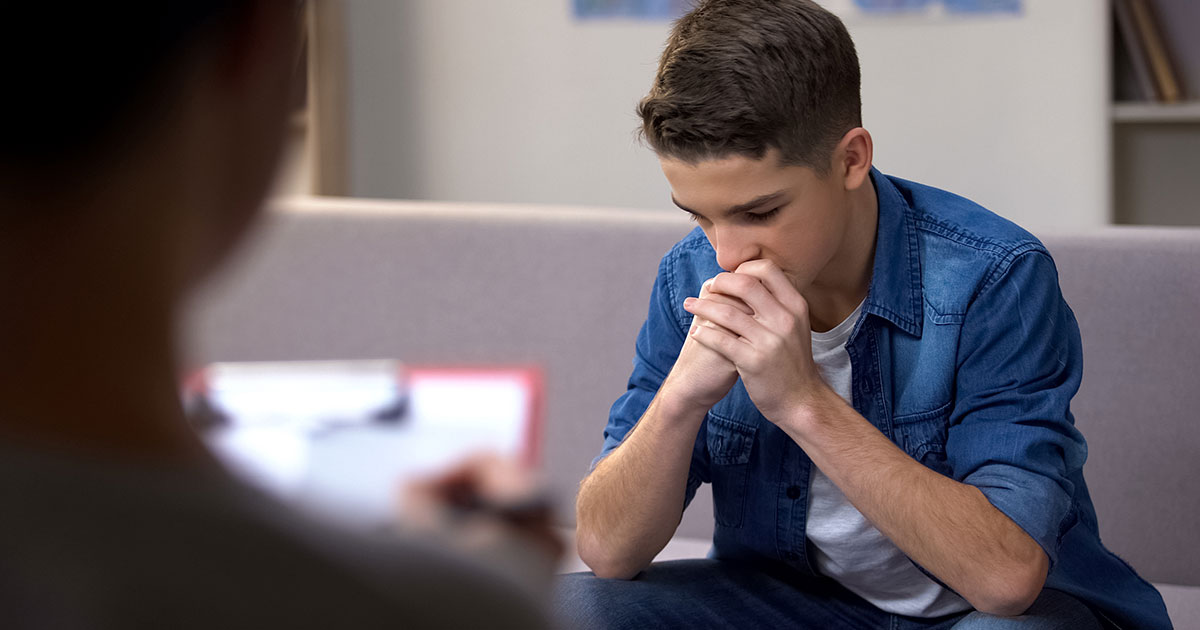
April 7, 2026 – A 12-year-old student deserved
Miranda protection for questioning in the tiny school resource officer’s (SRO) office and at an in-school suspension desk, a 4-3 Wisconsin Supreme Court majority held in
State v. K.R.C., 2026 WI 10. But everyone on the Supreme Court affirmed the circuit court’s finding of delinquency. The majority said it was harmless error. Other testimony sufficiently supported delinquency for fourth-degree sexual assault. “In sum, the [SRO’s] testimony about Kevin’s statements was
Continue Reading Wisconsin Supreme Court: Student in Custody at School, but Error Harmless
When the ‘Expert’ Is an Algorithm

When AI Provides Courtroom Expertise
Artificial Intelligence is a hot topic in every field, but, too often, when it comes to the legal system, it is lawyers’ and judges’ struggles with AI that make news, time after time. But while everyone is talking about “hallucinated” case citations, some are focusing on the other ways AI is entering the courtroom. For decades, expert evidence has required a human witness—a physician, engineer, accountant, or other specialist applying
Continue Reading When the ‘Expert’ Is an Algorithm
Defending High-Asset Divorce Cases Involving Domestic Violence Allegations
It’s something of a truism, but divorce has a way of bringing out the worst in people. Even spouses who have been married for decades often find themselves shocked by their partner’s behavior. This often includes very serious, and very often false, accusations of domestic violence or abuse.
In high-asset divorces, domestic violence allegations are made because they are effective. A well-timed accusation can shift the balance of a divorce proceeding dramatically, affecting everything from who stays in
Continue Reading Defending High-Asset Divorce Cases Involving Domestic Violence Allegations
Important Lessons from the Back of the Courtroom
Before law school, I would have called myself a professional observer. I started working at my county’s district attorney’s office at the age of 16. I was thrust into a world I knew nothing about, so I found myself in the back of the courtroom often. I thought this would be the best way to learn how the criminal justice system works and everyone’s role within it. It turned out I would learn so much more than that. At
Continue Reading Important Lessons from the Back of the Courtroom
Five Recreational Drugs That Can Land You in Prison in Wisconsin
Five Recreational Drugs That Can Land You in Prison in Wisconsin
Posted on March 22, 2026 in Drug Crimes Wisconsin has some of the most aggressively enforced drug laws in the Midwest. What might seem like a private event, like a weekend at a music festival or an experiment with something you assumed was low-risk, can result in a felony charge that follows you for the rest of your life. In 2026, Wisconsin prosecutors across the state continue
Continue Reading Five Recreational Drugs That Can Land You in Prison in Wisconsin