Lavinia Goodell: Wisconsin's First Woman Lawyer

The first woman lawyer admitted to the Wisconsin Supreme Court had to fight for that status, overcoming opposition from the most powerful legal figure in the state. Lavinia Goodell (1839-1880) was also one of the first female trial lawyers in the United States, a nationally-respected writer, a Vice President of the Association for the Advancement of Woman, a candidate for Janesville City Attorney, a successful lobbyist, a jail reformer, and a temperance advocate. Yet she is undeservedly obscure. Another woman’s likeness adorns her spot in books, on the web, and at the Rock County Courthouse. Lavinia Goodell: The Private Life and Public Trials of Wisconsin’s First Woman Lawyer aims to secure her rightful place in history.

Latest from Lavinia Goodell: Wisconsin's First Woman Lawyer - Page 5

“I expect to start Tuesday p.m. of Sept. 5”
Lavinia Goodell, August 27, 1871

During this week in 1871, thirty-two year old Lavinia Goodell left New York City and her job at Harper’s Bazar behind and boarded the first of a series of trains that would take her to Janesville, Wisconsin where she would live for the remaining eight and a half years of her life.
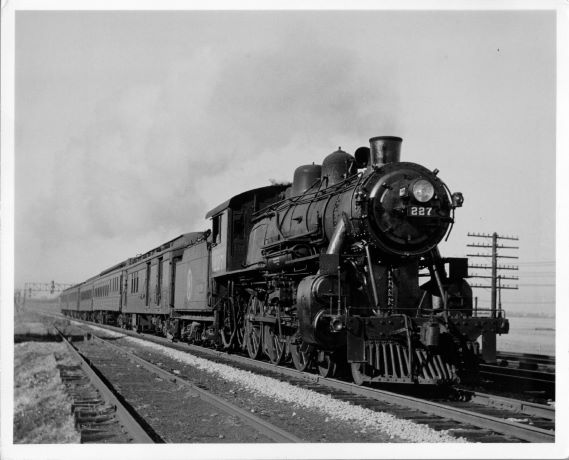
Lavinia’s departure from New York was unexpected. In June 1871, her sister and
Continue Reading “I expect to start Tuesday p.m. of Sept. 5”

“Trees, en masse, are like humanity en masse”

Lavinia Goodell, June 1861

During the Civil War years, when Lavinia Goodell assisted her father in publishing his anti-slavery newspaper, the Principia, she wrote a large number of pieces for the paper. (Some of them are featured here, here, and here.)  None of Lavinia’s contributions bear her full name, and many are signed only “L” or “L.G.” The anonymity allowed Lavinia to assume the identity of a
Continue Reading “Trees, en masse, are like humanity en masse”

“Put up at Park Hotel. Quite a stylish place.”
Lavinia Goodell, December 20, 1875

During the time Lavinia Goodell lived in Janesville, Wisconsin in the 1870s, she would occasionally have to take the train to Madison, the state’s capitol, for business. When she needed to stay overnight in Madison, she chose the Park Hotel.

Park Hotel, Madison, Wisconsin 1870s

The Park Hotel, at the corner of Main and Carroll Streets on the capitol square, opened in August of 1871
Continue Reading “Put up at Park Hotel. Quite a stylish place.”

“The Gazette is on the side of the people.”
Wisconsin State Journal, July 12, 1875

1870s Janesville, Wisconsin was not a large city, and its residents frequently encountered one another in both business and social settings. During her years in Janesville, Lavinia Goodell developed a very cordial relationship with the proprietors of the Janesville Gazette, both the local editor, Nicholas Smith, and the paper’s co-owner and editor-in-chief, General James Bintliff.

General James Bintliff (Photo courtesy of Wisconsin Historical


Continue Reading “The Gazette is on the side of the people.”

“The heavy, barred gates of the professions creak on their hinges.”
Lavinia Goodell, November 1875

In November of 1875, the seventh annual meeting of the American Woman Suffrage Association was held at Steinway Hall in New York. Over 200 delegates, both men and women, attended.

November 19, 1875 New York Daily Herald

Lavinia Goodell was unable to attend, but she wrote a letter for the occasion, and her friend and mentor, Lucy Stone, chairman of the executive committee,
Continue Reading “The heavy, barred gates of the professions creak on their hinges.”

“Mr. Sale was District Attorney & made a very kind and gentlemanly opposing counsel.”

Lavinia Goodell, November 18, 1875

While practicing law in Janesville, Wisconsin in the 1870s, Lavinia Goodell had the good fortune to deal with other attorneys who were good practitioners and good citizens. John W. Sale was one of them.

John Sale was one year Lavinia’s junior, born in Indiana in 1840. His parents moved to Rock County when he was an infant. Sale attended the
Continue Reading “Mr. Sale was District Attorney & made a very kind and gentlemanly opposing counsel.”

“I have proved my strong mindedness by climbing into the trees.”
Lavinia Goodell, July 13, 1873

Because of global transportation, refrigeration, and food preservation methods, modern grocery shoppers have year round access to a virtually unlimited variety of food.  Lacking those conveniences, the fare available to people in the nineteenth century was often quite limited. Lavinia Goodell’s extensive correspondence with family members frequently recounted what they were eating, particularly when they were able to enjoy seasonal delicacies such as
Continue Reading “I have proved my strong mindedness by climbing into the trees.”

“Lewis has come, but no horse.”

Maria Frost, July 12, 1854

Life in the mid eighteenth century was often both hard and unpredictable.

In the summer of 1853, fourteen-year-old Lavinia Goodell and her parents had recently moved to Brooklyn. Lavinia’s older sister and brother-in-law, Maria and Lewis Frost, lived in Bristol, New York, a town thirty miles southeast of Rochester. Lewis Frost was a Congregational preacher who, at that time, did not have his own church but rather filled
Continue Reading “Lewis has come, but no horse.”

“Do your part in the world’s work.”
Lavinia Goodell, December 1861

Lavinia Goodell had a strong work ethic and was rarely idle. In 1853, at age fourteen, she was already helping her father publish and distribute an anti-slavery publication and was very proud to report to her sister that after deducting the cost of ferry and stage expenses she had cleared over $7.00 for sixteen days of work and felt quite rich.

In 1861, Lavinia was twenty-two years old
Continue Reading “Do your part in the world’s work.”

“Frémont is honoring our metropolis with quite a stay.”
Lavinia Goodell, December 21, 1861

During the years Lavinia Goodell lived in New York, she took advantage of the city’s cultural events and met many leading figures of the day. In late 1861, during the early months of the Civil War, she met General John C. Frémont.

General John C. Frémont, c. 1862

Frémont was born in Georgia in 1813. In the 1840s he led a series of expeditions intended
Continue Reading “Frémont is honoring our metropolis with quite a stay.”

“Went to a temperance drama at Lappin’s Hall.”

Lavinia Goodell, February 10, 1874

Janesville, Wisconsin has a wealth of historical buildings remaining, including some frequented by Lavinia Goodell when she lived in the city in the 1870s. One such building is the Lappin-Hayes Block located at the corner of Main and Milwaukee Streets, in the heart of the city’s downtown.

Lappin Block, c. 1880

Janesville is named after Henry James, who built a timber house on the Rock River,
Continue Reading “Went to a temperance drama at Lappin’s Hall.”

“A young man from Beloit, by name of Dow, was examined and admitted with me.”
Lavinia Goodell, June 18, 1874

Lavinia Goodell was not the only person to successfully undertake the bar examination at the Rock County Courthouse and be admitted to practice law in Wisconsin on June 17, 1874. A second aspiring attorney went through the same trial. Lavinia wrote to her sister the next day, “A young man from Beloit, by name of Dow, was examined and
Continue Reading “A young man from Beloit, by name of Dow, was examined and admitted with me.”

“I am anxious to go to school next quarter.”
Lavinia Goodell, December 26, 1853

Lavinia Goodell was a sickly child and, as a result, had very little in the way of formal education until she and her parents moved to Brooklyn, New York in 1853. It has long been known that Lavinia graduated from the Brooklyn Heights Seminary, a girl’s school, in 1858, but we have recently discovered that before matriculating there, she briefly attended two other schools.
Continue Reading “I am anxious to go to school next quarter.”

“The extent to which wives flatter the vanity and humor the weaknesses of their husbands is humiliating to both men and women, and degrading to matrimony.”

Lavinia Goodell, October 1876

Lucy Stone, a lifelong advocate for women’s rights, was one of Lavinia Goodell’s mentors.

Lucy Stone

In 1870, Lucy and her husband, Henry Blackwell, launched the Woman’s Journal, a paper promoting suffrage and women’s rights. Lavinia Goodell wrote numerous articles for the paper and shortly before her death
Continue Reading “The extent to which wives flatter the vanity and humor the weaknesses of their husbands is humiliating to both men and women, and degrading to matrimony.”

“We women are all radicals.”
Lavinia Goodell, February 1860

The articles that Lavinia Goodell contributed to her father’s anti-slavery newspaper, the Principia, have been discussed in some of our earlier posts. (Read more here.) The February 25, 1860 issue of the paper contained an article she authored (although it was attributed to “Housekeeper”) titled “Meditations on Sweeping a Room.”

Twenty-year-old Lavinia’s piece was superficially about cleaning a room but, at a deeper level, it revealed that even at
Continue Reading “We women are all radicals.”

“I am in no haste to marry.”
Lavinia Goodell, February 14, 1864

While the majority of nineteenth century women married, Lavinia Goodell remained single and, by all accounts, her lack of a husband never bothered her. (Her sister, on the other hand, worried that Lavinia would not be able to support herself and hoped she would find a suitable spouse. Read more here.) The many articles Lavinia wrote for the Principia, her father’s anti-slavery newspaper, often poked
Continue Reading “I am in no haste to marry.”