
Italics indicate direct quotes from the application. Typos, including punctuation errors, come from the original application even though we have not inserted “(sic)” after each one. WJI has left them as is.
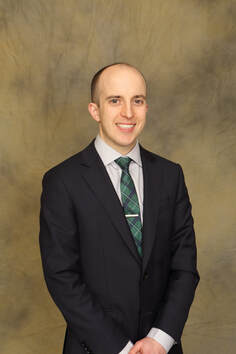
Appointed to: Kenosha County Circuit Court
Appointment date: Dec. 23, 2025, to term ending July 31, 2027
Education:
Law School – University of Wisconsin-Madison
Undergraduate – University of Michigan, Ann Arbor, Michigan
High School – Forest Hills Central, Forest Hills, Michigan
Recent legal employment:
June 2021-present – Supplemental court commissioner, Kenosha County Circuit Court
July 2012-present – Attorney, Puntillo Camilli & Hughes, Kenosha, Wisconsin
Bar and administrative memberships:
State Bar of Wisconsin
U.S. District Court for the Eastern District of Wisconsin
General character of practice:
I maintain a general civil practice that does not include family law or criminal law. My practice includes both litigation and transactional matters.
In addition, I serve as a supplemental court commissioner for the Kenosha County Circuit Court. In that capacity, I cover proceedings in criminal intake court, family court, juvenile court, traffic court, and small claims court.
Describe typical clients:
My typical clients are individuals, families, small to medium businesses, local colleges, and regional financial institutions. I have focused on estate planning, probate administration, trust administration, commercial litigation, higher education, commercial and residential real property, and providing outside general counsel services.
Number of cases tried to verdict: 3, not including small claims matters
List up to three significant trials, appeals, or other legal matters in which you participated as a judge or lawyer in the past seven years:
From 2018 through 2020, I represented a married couple as lead counsel in a property damage claim against their neighbors and their neighbors’ insurer in Kenosha County, Wisconsin. … The matter was significant both because it proceeded to a full jury trial and because private nuisance was the central claim. Public and private nuisance are notoriously complex legal questions.
From 2020 through 2023, I defended a former homeowner as lead counsel against misrepresentation claims arising from my client’s sale of a home in Kenosha County, Wisconsin. … The matter was significant because of its procedural complexity, which involved a plaintiff, defendant, and two intervening insurers, each of whom had a different interest in the action. It also entailed multiple summary judgment motions, one of which decisively resolved a complex question about the purchaser plaintiff’s insurer’s subrogation rights in my client’s favor.
And while outside the seven-year scope of this question, I also defended a trio of beneficiaries as second counsel from 2012 through 2016 against claims that they improperly received assets that should have been distributed to the plaintiff beneficiaries in Racine County, Wisconsin. … The matter was significant because it represented my earliest exposure to probate, probate-adjacent litigation, and appeals. The court ultimately dismissed all of the claims against my clients for failing to state a claim and on summary judgment. I undertook the legal research and wrote the briefs that supported those dispositive motions. The plaintiff beneficiaries appealed both decisions. The court of appeals upheld both decisions on appeal. I undertook the legal research and wrote the briefs that defended those decisions on appeal. I also find this matter to be significant because it substantially informed the advice I would give to future estate planning.
Experience in adversary proceedings before administrative bodies:
I have successfully represented clients in adversary proceedings before the U.S. Equal Employment Opportunity Commission and the Equal Rights Division of the Wisconsin Department of Workforce Development, as well as investigations by the Division of Animal Health at the Wisconsin Department of Agriculture, Trade and Consumer Protection and the Division of Industry Services at the Wisconsin Department of Safety and Professional Services.
Describe your non-litigation experience (e.g., arbitration, mediation).
I regularly represent clients in mediation, usually as ordered by a court in the context of ongoing litigation. In many instances, my clients have been able to resolve and settle their disputes as a result of mediation. I have also successfully represented a homeowner in a claim against a construction firm in binding arbitration before the Metropolitan Builders Association Construction Arbitration Board.
Position or involvement in judicial, non-partisan, or partisan political campaign, committee, or organization:
I volunteered in support of Angelina Gabriele’s campaign for election to the Kenosha County Circuit Court in 2021.
I was a member of Heather Iverson’s campaign committee when she sought election to the Kenosha County Circuit Court in 2024.
I was a member of Carli McNeill’s campaign committee when she sought election as the Kenosha County District Attorney in 2024.
Previous runs for public office: Not applicable
All judicial or non-partisan candidates endorsed in the last ten years:
Judge Angelina Gabriele, Kenosha County Circuit Court – Branch 3, 2021
Judge Heather Iverson, Kenosha County Circuit Court – Branch 6, 2024
Carli McNeill, Kenosha County District Attorney, 2024
Professional or civic and charitable organizations:
Kenosha County Bar Association, including as president and director, February 2014-present
Friends of the Kenosha Public Museum, including as president and director, May 2013-present
Kenosha Public Museum Foundation, secretary and director, February 2015-present
Visit Pleasant Prairie, director, February 2025-present
Kenosha Housing Authority, treasurer and commissioner, July 2019-present
Kenosha Courthouse Restoration Project. Blue Ribbon committee, July 2023-October 2024
Leadership Kenosha, participant, September 2012-May 2013
Significant pro bono legal work or volunteer service:
I have provided substantial volunteer service to Kenosha County since moving here after graduating from law school. As detailed in my answer to question 28, I have served on the boards of many different civic and charitable organizations. In that capacity, I have contributed countless volunteer hours. For example, I have organized and then volunteered at events sponsored by the Friends of the Kenosha Public Museums in support of the Kenosha Public Museums. I perform a similar function for almost every event sponsored by the Kenosha County Bar Association since I joined its board in 2014.
Quotes:
Why I want to be a judge:
Despite (or perhaps because of) being the child and grandchild of attorneys who later became judges, I never wanted to be an attorney or a judge myself. When faced with the inevitable questions about my plans after college, I always answered that I planned to do anything but attend law school. A summer internship put flight to that answer. I spent a summer providing technical support to local law firm, where I found myself fascinated by the actual work that attorneys do. After graduating from law school, I still maintained that I had no interest in crossing the bar and taking the bench. I went to law school to be an attorney. That meant a career of examining, analyzing, and solving problems for clients. I have had the good fortune to develop a practice that has allowed me to grapple with those challenges.
But an unexpected opportunity has tested and overwhelmed my professed judicial disinterest. In 2021, the Honorable Angelina Gabriele asked me to serve as a supplemental court commissioner in Kenosha County. I accepted her offer because I wanted to push myself to learn and apply law outside my normal civil practice. While presiding in family, juvenile, and criminal intake court has broadened my experience, I also discovered that I enjoy the freedom that accompanies the responsibility of presiding over the matters before me. When sitting on the bench, I do not have to build a legal argument in service of my client’s interests. Instead, I survey and construct the available law according to my best interpretation of the applicable statutes, decisions, and legal principles. When sitting on the bench, I do not have to probe for support for any particular party’s position. Instead, I sift through the facts presented, find the most important to the questions before me, then apply those facts to my interpretation of the applicable law. The process liberates me from the compromises that accompany advocacy. I want to serve as a judge because it will allow me to use that intellectual freedom to the benefit of the people of Wisconsin.
But more important than any intellectual freedom is the opportunity to do justice by listening to the people of Wisconsin. When I sit on the bench, I do not see plaintiffs, defendants, petitioners, respondents, victims, or witnesses, but people who often find themselves enmeshed in a complex and unfamiliar system. Each has complaints, frustrations, and problems that bring them to court. Justice is not just a decision; justice is a process. That process requires more than the clinical application of law. No matter the decision, the people before me should know that I heard them and considered their case. I want to serve the people of Wisconsin because I can do justice by listening to them.
Describe which case in the past 25 years by the Wisconsin Supreme Court or U.S. Supreme Court you believe had a significant positive or negative impact on the people of Wisconsin.
I believe two recent cases have had a significant impact on the people of Wisconsin. The first is Carpenter v. United States, 585 U.S. 296 (2018). In Carpenter, the FBI obtained cell site records from wireless carriers for a number of defendants accused of orchestrating robberies across Michigan and Ohio. The cell site records connected one particular defendant to the times and locations of several of the charged robberies. However, the FBI obtained the defendant’s cell site records without a search warrant. The defendant argued that the warrantless seizure of their cell site records violated the Fourth Amendment. The Court’s decision overturned the lower court decisions that the Fourth Amendment did not apply to the defendant’s cell site records and, in turn, held that acquiring those records required a warrant. While I applaud Carpenter’s holding, I find its reasoning to be even more important for the people of Wisconsin. First, the Court’s decision bolstered the privacy-based interpretation of the Fourth Amendment as a protection against otherwise overwhelming and unavoidable surveillance. Second, and more importantly, Carpenter reexamined and narrowed the third-party doctrine. In doing so, the Court functionally recognized that modern life requires people to provide their data and records to third parties. Its decision allows the people of Wisconsin to participate in that life without forfeiting their right to be free from arbitrary searches and seizures.
The second is Banuelos v. University of Wisconsin Hospitals & Clinics Authority, 2023 WI 25, 406 Wis. 2d 439, 988 N.W.2d 627. In Banuelos, the plaintiff requested electronic copies of her medical records from the defendant pursuant to section 146.83 of the Wisconsin Statutes. That section describes the process by which health care providers must provide patients with access to their medical records and also allows health care providers to levy certain charges for providing copies of medical records. The defendant charged the plaintiff for her medical records and the plaintiff filed suit to challenge those charges. The defendant argued that the statute did not explicitly prohibit charging patients for electronic copies of their medical records, which meant that it could impose such charges. The plaintiff offered the opposite interpretation: the statute did not specifically allow health care providers to charge for electronic copies of patients’ medical records, so the defendant had no authority to demand copying or production fees. The Court held that the statute’s silence did not equal permission. Once again, I believe the specific holding of Banuelos matters less than its larger context. In Banuelos, the Court untangled an underappreciated corner of the Wisconsin Statutes, which accrued to the benefit of the people of Wisconsin. The Wisconsin Statutes have lots of other underappreciated and unexamined corners that the people of Wisconsin regularly encounter. The Court’s examination and interpretation of those statutes often provides the greatest practical and beneficial impact for the people of Wisconsin.
Two or three judges whom I admire and why:
The first justice that I admire is Justice Elena Kagan, of the U.S. Supreme Court. I usually find common cause with her jurisprudence, especially her approach to statutory construction and her perspective on the necessity and benefits of the administrative state. But more importantly, Justice Kagan has a well-deserved reputation as the best legal writer on the Court. Her opinions eloquently distill intricate legal concepts into accessible explanations. And she does so without sacrificing nuance or eroding their inherent complexities. When I write to or speak with clients, I aspire to make myself as clear and as coherent as Justice Kagan’s explanation of the fiendishly complex application of time to principal beneficiaries and derivative beneficiaries during the visa application process in Scialabba v. de Osorio, 573 U.S. 41, 46-56 (2014).
The second judge that I admire is Judge David P. Wilk of the Kenosha County Circuit Court. Much of my litigation practice has occurred in the civil divisions of the Kenosha County. Judge Wilk has spent much of his tenure presiding over one of the two branches assigned to civil actions in Kenosha County. As such, I have had many opportunities to watch Judge Wilk manage his courtroom. Those observations have led me to admire Judge Wilk’s temperament and composure. While he has high expectations of the attorneys that appear before him, he treats them as colleagues, not combatants. Judge Wilk allows attorneys the opportunity to advocate for their clients, while respectfully probing the strength of their arguments. As importantly, he accepts challenges to his initial impressions without rancor. When pro se parties appear before Judge Wilk, he keeps them to the narrow path where they can present evidence, argue their position, and tell their story while also abiding by the applicable rules of civil procedure and evidence, all without arousing their ire.
And while just outside the scope of this question, I also admire both Professor Orin Kerr and Radley Balko. Professor Kerr, of Stanford Law School, focuses his much of his scholarship on the Fourth Amendment. In particular, he has frequently written about the Fourth Amendment’s collision with emerging digital phenomena like GPS location data and cloud-based records. I do not agree with all of Professor Kerr’s answers, but his writing asks important questions that the Fourth Amendment’s text and case law do not immediately answer. Mr. Balko, formerly of the Washington Post, frequently writes about areas of the criminal justice system that are particularly susceptible to institutional abuse. His reporting has exposed me to the often unseen limitations of many criminal forensic techniques and the unintended consequences that can accompany the militarization of law enforcement.
The proper role of a judge:
During his confirmation hearings, future Chief Justice John Roberts famously quipped that “I will remember that it’s my job to call balls and strikes, and not to pitch or bat.” While I understand why Judge Roberts downplayed the judiciary’s role in making law, I fundamentally disagree with his characterization. To extend Justice Robert’s analogy, judges do not just call balls and strikes. They also decide the strike zone. I identified Banuelos v. University of Wisconsin Hospitals & Clinics Authority, 2023 WI 25, 406 Wis. 2d 439, 988 N.W.2d 627, as a decision that has significantly benefited the people of Wisconsin because it illustrates this function. That case did not turn on a narrow reading of the statute, but on the Court’s decision about how to read that statute. Expanding its gaze to examine the statute’s context and legislative history allowed the Court to conclude that the statute’s text did not license the defendant to charge additional fees. A judge’s proper role is to interpret the law as enacted in statute and decided by precedent. But a judge must also recognize how their framing of the law can push their decision in a particular direction and use that framing as an opportunity to do justice.
Second, a judge’s role is to manage their courtroom with respect for the parties appearing before them. That respect takes two forms. First, a judge must remain humble and aware of their own limitations. Donning a black robe does not convey an unimpeachable knowledge of the law and relevant. A judge must know the law and understand the facts, but accept the possibility of their own error. Whether pro se or represented by an attorney, every party should have an opportunity to state their case and have their argument honestly considered. Second, a judge must balance that opportunity with regards for the time and burdens of the other parties in that matter or other matters on the calendar. A judge’s role is also to oversee an efficient courtroom.
Finally, I believe that the most underappreciated, but perhaps most important, role of a judge is to listen to the parties. In serving as a court commissioner, I have found that most parties, whether represented by counsel or pro se, want to know that someone has recognized the facts, feelings, and frustrations that brought them to court. It can be tempting to tune out the parties’ emotions and focus on the outcome. But a judge should make the parties aware that they heard what they said and took it into account when rendering a decision. As importantly, a judge should do their best to help the parties understand the reasons for their decision and why it did, or did not, go in their favor. By listening to and acknowledging the parties, a judge helps preserve the legitimacy of their court and the legal system at large.