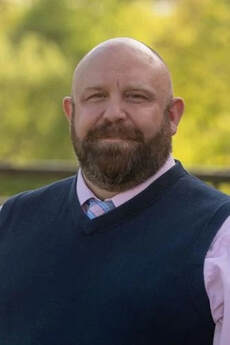
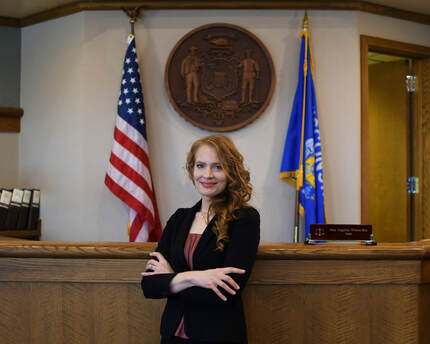
Candidates Aaron Marcoux and Angeline Winton-Roe vie for the seat on the Washburn County Circuit Court currently held by Winton-Roe. The election is April 7.
Marcoux is the Washburn County district attorney, having been appointed by Gov. Tony Evers in 2019 and elected to four-year terms in 2020 and 2024. Before then he was an assistant district attorney, and before that an assistant state public defender. He graduated from the University of Wyoming College of Law in 2010. A copy of his resume/CV is here.
Winton-Roe is the incumbent, having been appointed to the seat by Gov. Tony Evers in 2019 and elected to a six-year term in 2020. WJI’s “Evers’ judges” post about her is here. She previously was the elected Washburn County District Attorney; before that she worked in private practice and then as an assistant district attorney. She graduated from the William Mitchell College of Law (St. Paul, Minnesota) in 2008. A copy of her resume/CV is here.
WJI asked each of the candidates to answer a series of questions. The questions are patterned after some of those on the job application the governor uses when he is considering judicial appointments.
Answers are printed as submitted, without editing or insertion of “(sic)” for errors. The candidates are presented alphabetically by last name.
|
Marcoux
Aaron Marcoux Why do you want to become a judge? I am seeking to serve as Washburn County Circuit Court Judge to continue serving our community and to help ensure our court operates with fairness, efficiency, and respect for everyone who enters the courtroom. Early in life I saw firsthand the impact of what happens in a courtroom. As a child I witnessed the harm caused by domestic violence, but I also experienced the positive impact of the justice system when I was adopted just before my 11th birthday. Those experiences shaped my understanding that the court plays an important role in both protecting people and helping families move forward. During college I became involved in student government, which strengthened my interest in law and public service. As my understanding of the world grew, so did my desire to help others through a career in the legal system. For more than 15 years I have served the State of Wisconsin as both a public defender and a prosecutor. That experience has allowed me to work in courts across northern Wisconsin and to see how important fairness, consistency, and professionalism are to maintaining public trust. I also believe strongly that the court belongs to the people it serves, not the individual sitting on the bench. A judge’s role is not about power or position, but about responsibility. The judge must apply the law fairly, listen carefully, and treat every person who enters the courtroom with dignity and respect. Serving as judge would allow me to continue serving our community and bringing that commitment to the bench. Describe which U.S. Supreme Court or Wisconsin Supreme Court opinion in the past 25 years you believe had a significant positive or negative impact on the people of Wisconsin and explain why. One U.S. Supreme Court decision that has had a significant impact on elections nationwide, including in Wisconsin, is Citizens United v. Federal Election Commission. In that case, the Supreme Court considered whether federal campaign finance laws could restrict political spending by corporations and other organizations. The Court ultimately held that the First Amendment protects independent political expenditures by corporations, unions, and other entities, concluding that political spending is a form of protected speech. The decision substantially changed the landscape of campaign finance in the United States by allowing independent groups to spend unlimited amounts of money advocating for or against political candidates, provided those expenditures are not coordinated with a campaign. The effects of this decision became clear in the 2025 Wisconsin Supreme Court election. Harnessing the power of the Citizens United ruling, outside independent groups made it the most expensive judicial election in American history. Spending exceeded $100 million dollars with an estimated 60% coming from outside the State of Wisconsin. Spending on this single race was more than twice the amount spent on State Supreme Court races nationwide in 2000. The effect of this decision on the people is significant. Wisconsin is one of a relatively small number of states where judges are elected by the public. That system reflects an important principle: the authority exercised by the judiciary ultimately comes from the people. The fact that outside contributors spent more than the candidates themselves raise the question: If outside contributors in elections have more influence on the electors than the candidates themselves who will the candidates be serving once elected? And if this level of spending continues in judicial elections, then how will we maintain confidence in the independence and impartiality of the courts. Describe your judicial philosophy. Judicial philosophy generally involves two related questions: how a judge interprets the law and how a judge understands their role within our system of government. First, when interpreting the law, judges must begin with the text of the constitution, statutes, and controlling case law. Words should be interpreted according to their plain and intended meaning at the time they were written. Courts should apply the law as it is written rather than rewriting or expanding it to achieve a preferred outcome. Second, judges must respect the constitutional structure of government. Our system was intentionally designed with separate roles for the legislative, executive, and judicial branches. The legislature writes the laws, the executive branch enforces them, and the courts interpret and apply them to individual cases. Because of this structure, a judge’s responsibility is not to create policy or substitute personal preferences for the law. Instead, the judge must apply the law faithfully and consistently while ensuring that the constitutional rights of all individuals are protected. Ultimately, a judge’s role is to provide a fair and neutral forum where disputes are resolved according to the law and the facts presented in each case. Describe one or two of the most significant cases in which you were involved as either an attorney or a judicial officer. Throughout my career I have handled many serious cases, but those involving the loss of human life have been among the most significant. I have both defended and prosecuted homicide cases. These cases are profound not only because a life has been lost, but because of the lasting impact on families and the broader community. For the victim’s family, the loss is permanent and deeply personal. For the defendant, the stakes are equally significant because the consequences of the legal process will affect the remainder of their life. In these cases there are no real “winners.” The role of the justice system is to ensure the truth is presented, the law is applied fairly, and everyone involved is treated with dignity and respect. Another significant case involved the prosecution of a former priest for child sexual assault that had occurred nearly thirty years earlier. The defendant had left the United States and lived overseas for many years. When he eventually returned to the United States for medical treatment, the case could proceed because the statute of limitations had been tolled while he was outside the jurisdiction. The case required working closely with multiple victims who had carried the effects of the abuse for decades. Bringing the case forward presented evidentiary and logistical challenges due to the age of the allegations. However, the outcome provided many of the victims with a sense that their voices had finally been heard and that accountability had been achieved. Describe your legal experience as an advocate in criminal litigation, civil litigation, and administrative proceedings. For the past 15 years my legal career has focused primarily on criminal litigation in northern Wisconsin. I began my career in 2010 as a Wisconsin State Public Defender representing individuals in Ashland, Bayfield, and Iron Counties. That role involved advising clients, litigating motions, conducting trials, and ensuring that constitutional rights were protected throughout the legal process. In 2015 I joined the Sawyer County District Attorney’s Office as an Assistant District Attorney. In that role I prosecuted a wide range of criminal matters and worked closely with law enforcement, victims, and community partners. In 2019 I was appointed Washburn County District Attorney and was subsequently elected to that position in 2020 and re-elected in 2024. My career has also involved participation in treatment courts, including Drug Court and Veterans Court, which focus on addressing underlying causes of criminal behavior while maintaining accountability. Regarding administrative proceedings I represented probationers in revocation proceedings within the Wisconsin Department of Corrections and review proceedings for individuals who have been placed in the care of the Department of Health and Human Services. In Wyoming, I assisted in representing the State Departments of Health, Education, Family Services, and Transportation for Wyoming Attorney General’s Office. I also served as an extern law clerk for the Chief Justice of the Wyoming Supreme Court, where I conducted legal research, prepared memoranda, and assisted the court in reviewing legal arguments and case materials. Describe an instance when you were challenged and had to exhibit courage in the face of adversity or opposition and how you handled that situation. Like many people, I experienced challenges early in life that shaped my perspective. These experiences ultimately influenced my path toward the legal profession. One of my earliest memories occurred when I was about five years old. My two younger sisters were visiting their father overnight when he became intoxicated. My mother went to retrieve them, and because I was too young to stay home alone, I went with her. When we arrived, an argument began that eventually became physical. Even as a young child, I instinctively tried to place myself between my mother and the abuse in an attempt to protect her. Given the difference in size, I was easily pushed aside and thrown against the wall. This process repeated several times. This experience, coupled with being the oldest child and the only male in the family left me feeling I had a duty to protect. First my family and eventually everyone I could. A few years later, my mother met the man who would later become my father. I vividly remember another night when my sisters’ father attempted to break into our home while intoxicated. This time my father stood between him and our family. For the first time, I understood what it meant to have someone protecting us. He later adopted me when I was eleven years old and helped create the stable family environment that allowed me to overcome those traumatic events moving forward in life with confidence and conviction. The family destruction from divorce, effects of domestic violence and joys of adoption all happen to real people in the courtroom every day. The people enduring these realities are our neighbors and deserve dignity and respect when life brings them into a courtroom. They also deserve a court that understands its primary purpose is to serve them. A court that is unaffected by external pressures providing predictable and consistent outcomes. Do you support requiring a justice or judge to recuse him/herself from cases involving donors of money or other resources to the judge’s election? If not, why not? If so, why, and what contribution limits would you set? I support recusal when a judge’s impartiality might reasonably be questioned, including situations involving campaign contributions. Judges are held to high ethical standards that require them not only to avoid actual impropriety but also the appearance of impropriety. Public confidence in the judicial system depends on the knowledge that decisions are made based solely on the law and the facts of the case. If a reasonable person could question whether a financial contribution created an obligation or influence, recusal may be appropriate to preserve confidence in the court’s neutrality. At the same time, the rules governing campaign contributions and recusal standards are established through the legislative process and through judicial ethics rules. Judges must follow those standards as written. Although contribution limits may provide more stability to the election process, as a judge it would not be my role to set nor create those limits. The goal should always be maintaining trust in the fairness and impartiality of the judicial system. What are the greatest obstacles judges face when trying to deliver true justice? What can or should be done about them? [Define “true justice” as you see fit.] True justice is generally defined as the impartial and proportional application of fairness focused on restoration and reconciliation. True justice aims to hold offenders accountable and provide safety for those involved while addressing the root cause(s) of the behavior. One of the greatest challenges judges face is the limited number of tools available to address complex human problems. Courts typically rely on three primary options: financial penalties, probation, and incarceration. Each of these can serve an important purpose, but they are not always sufficient to address the root causes of behavior such as addiction, mental health challenges, or economic instability. Another challenge is the limited availability of resources needed to support rehabilitation and prevention efforts. Evidence based approaches such as treatment courts, substance abuse programs, and other intervention strategies have shown positive results, but they depend heavily on community resources and cooperation among agencies. As with most systemic issues in government, the first response needs to be more resources, but money in and of itself is not the cure. Northern Wisconsin communities need more addiction specialists, mental health providers and housing options. Community resources need to be pooled and coalitions strengthened. Experts from varying disciplines need to collaborate to identify and implement strategic community wide programs. The courts must be an active participant in the discussion to understand the needs of the community and be aware of available resources. Once informed, the courts can make decisions that protect public safety and promote accountability. The goal of the court is to apply the law fairly while encouraging outcomes that strengthen the community and reduce future harm. Provide any other information you feel would be helpful to potential voters deciding for whom to vote. Voters should understand that a judicial election is not simply about choosing an individual. This election is about choosing how the court will serve the community. I believe the authority exercised by the court ultimately comes from the people. The courtroom is a public institution designed to serve the community, not the individual sitting on the bench. Throughout my life I have been guided by the idea of servant leadership. My father served more than thirty years in the Army and Army Reserve, and that example of service shaped my approach to both life and career. My older brother followed in his footsteps, allowing me to be the first person in my family to attend college. I worked my way through community college, university, and law school before beginning my legal career. For more than fifteen years I have served the people of northern Wisconsin as a public defender, prosecutor and as an advocate for community health initiatives. Those experiences have given me a broad understanding of the justice system and the responsibility that comes with decisions made in the courtroom. If elected, I will bring a commitment to fairness, efficiency, and respect to the Washburn County Circuit Court. I will approach the role with humility and a clear understanding that the court exists to serve the people of our community. |
Winton-Roe
Angeline Winton-Roe Why do you want to continue as a judge? Serving as a judge is both a responsibility and a privilege. Every case that comes before the court represents something deeply important in someone’s life: their family, their safety, their livelihood, or their future. The role of a judge is to approach each matter with fairness, patience, and careful attention to the law and the facts. I have sought to carry out this responsibility with humility and respect for the people of Washburn County. Our community expects a court that is steady, thoughtful, and impartial. My goal has always been to ensure that every person who appears in the courtroom knows they were heard, treated with dignity, and judged according to the law. A community court must also be a place where people feel welcome, even during some of the most difficult moments in their lives. Many who come before the court are facing uncertainty, conflict, or hardship. Some arrive feeling overwhelmed, overlooked, or even forgotten. It is essential that the courtroom remain a place where every person, regardless of their circumstances, knows they will be treated fairly and respectfully, and that their voice is heard. In my service as circuit court judge, maintaining stability and experience on the bench has been a priority. Courts serve the public best when decisions come from careful preparation and a close review of precedent, rather than outside pressures or shifting viewpoints. Detailed and accurate preparation, clear findings, and a fully developed record help ensure that decisions are transparent and capable of meaningful review when necessary. Judges must also remain mindful of the limits of their role and apply the law as written, leaving policy decisions to the legislative branch. A judge’s responsibility is to apply the law faithfully and consistently in accordance with the Constitution and the laws of the State of Wisconsin. Washburn County is a community where people know one another and care deeply about fairness and accountability. It is an honor to serve a community like this. I remain committed to ensuring that our court reflects the values of this community: fairness, respect, and equal justice under the law, and to upholding the integrity of the court for everyone who appears before it. Describe which U.S. Supreme Court or Wisconsin Supreme Court opinion in the past 25 years you believe had a significant positive or negative impact on the people of Wisconsin and explain why. In that decision, the court explained that when a motion alleges specific, material facts that, if true, would entitle the defendant to relief, the circuit court must hold an evidentiary hearing. Conversely, if the motion is conclusory or fails to allege sufficient facts, often described as failing to provide the “who, what, where, when, why, and how” supporting the claim, the court may deny the motion without a hearing. This standard is particularly important in the context of ineffective assistance of counsel claims, which make up the majority of post-conviction motions and frequently serve as the gateway to a Machner hearing. From the perspective of a trial court, this guidance has proven especially valuable. Post-conviction motions often raise complex legal and factual questions that extend beyond the existing trial record. Judges must determine whether additional factual development is necessary before a claim can be properly resolved. The framework established in Allen serves an important gatekeeping function. It prevents courts from expending limited judicial resources on unsupported allegations while ensuring that potentially meritorious claims receive appropriate evidentiary consideration. The decision also promotes clarity in the way post-conviction claims are presented. Attorneys are expected to articulate specific factual allegations and legal grounds for relief that satisfy the Allen standard. This encourages careful motion practice and provides trial courts with a clear structure for evaluating whether a hearing is necessary. Clear and workable guidance from appellate courts is essential to the consistent administration of justice. When the law provides a structured framework for decision making, it helps ensure that similar cases are treated similarly across Wisconsin. That consistency promotes fairness, supports the efficient operation of the courts, and strengthens public confidence in the judicial system. Decisions such as Allen illustrate how appellate courts can provide practical direction that assists trial judges in resolving difficult legal issues while protecting the rights of the parties involved. Describe your judicial philosophy. My judicial philosophy is grounded in fairness, preparation, restraint, and respect for the rule of law. Every case that comes before the court represents something deeply important in someone’s life, and the responsibility of the court is to resolve those matters fairly and according to the law. I believe the role of a judge is to listen carefully, apply the law faithfully, and ensure that proceedings are conducted with dignity and respect for everyone involved. People who come to court deserve to know that their concerns will be heard and that decisions will be based on the facts, the law, and the evidence properly admitted in court. In my service as circuit court judge, I have focused on maintaining stability, preparation, and careful attention to the record. Courts function best when decisions come from thoughtful review of the law, precedent, and the record developed in the courtroom rather than outside pressure or shifting viewpoints. Careful preparation and deliberate consideration of the issues presented help ensure that rulings are grounded in established legal principles and consistent with the jurisprudence that guides Wisconsin courts. Time and care are essential to the judicial process. Judges are often called upon to make difficult decisions that affect people’s lives, and those decisions must be made thoughtfully and deliberately. Taking the time to review the record, consider the applicable law, and articulate clear findings helps ensure that the parties understand the basis for the court’s decision and that the decision is capable of meaningful appellate review. Clear reasoning and a well-developed record also promote consistency across cases and help maintain public confidence in the fairness of the judicial system. Judges must also remain mindful of the limits of their role. The responsibility of the court is to apply the law as written in accordance with the Constitution and the laws of the State of Wisconsin, not to advance personal preferences or policy goals. Washburn County is a community where people know one another and care deeply about fairness and accountability. I remain committed to ensuring that our court reflects those values and that every person who appears before the court is treated fairly and respectfully. Describe one or two of the most significant cases in which you were involved as either an attorney or a judicial officer. During the investigation, the defendant made an unsolicited confession in the presence of a law enforcement officer. The trial court ruled that the statement violated Miranda and suppressed the confession. Believing that decision was inconsistent with controlling precedent, our office sought reconsideration, which was denied. We then sought review from the Court of Appeals. The Court granted a stay and ultimately concluded that there had been no custodial interrogation and that the confession was voluntary. That experience reinforced an important lesson about the judicial process. Courtrooms move quickly, decisions must often be made under pressure, and the law is not always simple. It underscored the importance of carefully reviewing both the law and the record and applying controlling precedent deliberately. Another memorable case occurred early in my judicial career and involved a homicide trial assigned to me outside my county. The case required many weeks of pretrial litigation and motion hearings, followed by a two-week jury trial involving numerous witnesses, attorneys, jurors, court staff, and law enforcement officers. Cases of this magnitude test the responsibilities of the court. As the presiding judge, my role was to ensure that the proceedings remained fair, to make careful rulings on the law, and to provide the jury with clear instructions so that the case could be decided solely on the evidence admitted in court and the applicable law. Ultimately, the jury returned a guilty verdict. At sentencing, I applied the required legal factors and explained the basis for the sentence on the record. Careful findings and a clear record help ensure that decisions remain transparent and capable of meaningful appellate review. Describe your legal experience as an advocate in criminal litigation, civil litigation, and administrative proceedings. I began my career practicing family law and later worked in private practice representing individuals and families in a variety of legal matters. Family law cases often involve deeply personal and complex situations and require methodical preparation, thoughtful advocacy, and sensitivity to the significant impact court decisions can have on families and children. During that period, I also served as a Guardian ad Litem representing the best interests of children in family court proceedings. That role required independent investigation, careful evaluation of evidence, and recommendations focused on the welfare of the child. It also required balancing competing perspectives while ensuring that the court received clear and reliable information on which to base its decisions. My experience in criminal litigation comes primarily from my service as an Assistant District Attorney and later as District Attorney. In those roles, I handled cases from charging decisions through trial preparation and trial. Over the course of my time as a prosecutor, I worked on more than thirty trials over a one year period. That experience required close attention to constitutional protections, evidentiary rules, and the prosecutor’s responsibility to ensure that justice is done rather than simply to secure convictions. My work has also involved administrative proceedings and matters requiring careful attention to statutory and procedural frameworks governing agency decision making. Today, as a circuit court judge, I draw on those experiences daily. Having served as an advocate, a prosecutor, and now a judge, I have had the opportunity to see the justice system from several perspectives. Those experiences reinforce the importance of careful preparation, thorough review of the record, and respect for due process to ensure that cases are decided fairly and in accordance with the law. Concrete conclusions backed by a meticulous record also help ensure that decisions are transparent and capable of meaningful appellate review. Describe an instance when you were challenged and had to exhibit courage in the face of adversity or opposition and how you handled that situation. In practice, that often requires slowing the process down rather than moving it along. Judges manage crowded calendars and significant caseloads, but the demands of the docket cannot take precedence over the obligation to carefully review the law and the facts before making a decision. Taking additional time to ask questions, clarify the record, or consider the legal basis for a ruling is sometimes necessary, even when it is inconvenient or unexpected by the parties. One situation that illustrates this occurred while I was presiding over a criminal case in which both attorneys presented a negotiated plea agreement and expected the court to adopt their recommendation at sentencing. Based on the information initially presented, the court had only a limited understanding of the underlying facts, particularly because a presentence investigation had been waived. Rather than proceed immediately to sentencing, I asked additional questions about the factual basis for the plea, the defendant’s background, and the reasoning behind the recommended sentence. I reviewed the available record more closely and considered whether the proposed outcome was consistent with the applicable legal factors. After that review, I determined that the recommended disposition did not fully address the circumstances of the case and made an independent decision regarding sentencing. That decision was not what either party had requested, and it created some tension in the courtroom. However, it was necessary to ensure that the outcome was based on the law and the facts rather than the expectations of the parties. Experiences like that reinforce the idea that judicial courage is often demonstrated in small, deliberate decisions. It is reflected in taking the time to build a complete record, asking necessary questions, and making independent determinations, even when doing so is difficult or unpopular. Do you support requiring a justice or judge to recuse him/herself from cases involving donors of money or other resources to the judge’s election? If not, why not? If so, why, and what contribution limits would you set? Wisconsin already has a framework that addresses this issue. Judges must follow the Wisconsin Code of Judicial Conduct, which requires disqualification when a judge’s impartiality might reasonably be questioned. Campaign contributions are also publicly disclosed, and litigants have the ability to raise concerns through motions for recusal when appropriate. I support maintaining strong disclosure requirements and clear ethical standards that protect public confidence in the judiciary. At the same time, it is essential to recognize that judicial elections are part of Wisconsin’s constitutional structure. In smaller communities especially, many people who support a judicial campaign are also members of the community who may appear in court at some point in time. For that reason, a system that requires automatic recusal solely based on lawful campaign contributions can create practical challenges and may unintentionally allow parties to manipulate which judge hears a case simply by making or soliciting contributions. Courts must guard against both actual bias and systems that invite strategic behavior. In my view, the best approach is the one reflected in Wisconsin’s current framework: strong transparency, clear ethical rules, and case-by-case evaluation when a legitimate question about impartiality arises. Judges must always be willing to step aside when circumstances would lead a reasonable person to question their impartiality, consistent with both ethical standards and constitutional due process principles governing judicial recusal. At the same time, judges have an obligation to carefully evaluate recusal requests and the surrounding circumstances. The integrity of the judicial process depends not only on avoiding actual bias, but also on ensuring that recusal decisions are grounded in law and principle rather than strategic advantage. Ultimately, the goal is to preserve both judicial independence and public confidence in the fairness of the courts. Ethical standards, transparency in campaign finance, and a judge’s commitment to impartial decision making are all essential to maintaining that trust. What are the greatest obstacles judges face when trying to deliver true justice? What can or should be done about them? [Define “true justice” as you see fit.] One of the greatest challenges judges face in achieving that goal is the complexity of the cases that come before the court. Many matters involve difficult personal circumstances, family conflict, addiction, financial hardship, or mental health struggles. Judges must apply the law faithfully while recognizing that the decisions made in a courtroom often affect the lives of real people and families in very significant ways. Another challenge is the limitation of resources available to the justice system. Courts rely on many partners, including law enforcement, attorneys, treatment providers, social services, and community organizations, to help address the underlying issues that often contribute to legal problems. When those resources are limited, the court’s ability to help move people toward stability and accountability can be more difficult. A third challenge is maintaining public confidence in the judicial system. In today’s environment, there can be pressure from public opinion, politics, or social media commentary. Judges must remain disciplined in focusing only on the law and the evidence presented in the courtroom, even when outside voices are loud. Addressing these challenges requires continued commitment to the principles that support a fair justice system. Courts must operate with transparency and respect for due process. Communities should continue investing in services that address the underlying causes of many cases, including treatment, rehabilitation, and support programs. Judges must remain committed to the ethical standards that require impartiality, patience, and careful attention to the law. Justice is not about speed or satisfying every perspective. It is about a process that ensures fairness, accountability, and respect for the rule of law. When courts uphold those principles consistently, they move us closer to what I believe “true justice” should be. Provide any other information you feel would be helpful to potential voters deciding for whom to vote. The work of a judge often begins long before a hearing or trial takes place. Diligent preparation and close attention to the record are essential. Court decisions must be grounded in the law, the evidence presented, and a clear and accurate record of the proceedings. Taking the time to review the record carefully helps ensure that decisions are thoughtful, well-reasoned, and fair to everyone involved. . . . (Edited for length) Equally important is listening. When people come to court, they deserve to know they will be heard. That means giving each party the opportunity to present their position and ensuring that proceedings are conducted with respect and fairness. A courtroom should be a place where individuals can trust that the process will be orderly, impartial, and guided by the rule of law. Throughout my legal career, I have had the opportunity to serve the justice system in several roles. I worked in private practice and family law, served as a Guardian ad Litem representing the best interests of children, prosecuted cases as an Assistant District Attorney and District Attorney, and now serve as a circuit court judge. Each of those experiences has provided a different perspective on how the justice system functions and the responsibilities carried by those who participate in it. Washburn County also has a long legal history in my family. In 1920, my great-grandfather, Eugene Ward Winton, graduated from the University of Wisconsin Law School and returned home to practice law in Shell Lake. He later served the county as district attorney and county judge. His dedication to public service helped shape my own understanding of the responsibility that comes with serving in the law. More than a century later, I was humbled to become the first woman elected to this bench. My commitment remains the same: to approach every case with preparation, to listen carefully, to protect due process, and to ensure that the record and the law guide every decision. Public confidence in the courts is built one case at a time—through careful preparation, a complete record, and decisions grounded in the law and the facts. |