
Candidates Huma Ahsan and Ben Jones vie for the Branch 1 seat on the Dane County Circuit Court. The election is April 7.
Ahsan is an immigration law attorney and owner of Madison Immigration Law. She graduated from Stetson College of Law (Florida) in 1999. A copy of her resume/CV is here.
Jones is the incumbent, having been appointed to the seat by Gov. Tony Evers in 2025. WJI’s “Evers’ judges” post about him is here. He previously was a staff attorney then chief legal counsel at the Wisconsin Department of Public Instruction. Jones graduated from the University of Wisconsin Law School in 2012. A copy of his resume/CV is here.
WJI asked each of the candidates to answer a series of questions. The questions are patterned after some of those on the job application the governor uses when he is considering judicial appointments.
Answers are printed as submitted, without editing or insertion of “(sic)” for errors. The candidates are presented alphabetically by last name.
|
Huma Ahsan
|
Ben Jones
|

|
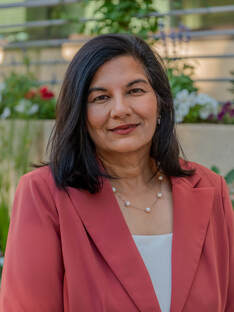
Huma Ahsan Why do you want to become a judge? I’m running for judge because justice is personal. Every person who stands before the court deserves a system that works for them, regardless of who they are. The courtroom is not just where laws are interpreted. It is where lives are changed, where rights are affirmed or denied, and where the promise of fairness must become real. I’m running to ensure that the law serves all people, regardless of where they come from, how much money they have, what language they speak, their gender identity or sexual orientation. I am running to preserve the third branch of local government, the courts. Our courts must remain in the hands of the people of Dane County. We are living in a chaotic and dangerous moment. Constitutional protections are weakening. People are being targeted for who they are and what they believe. Across this country, including in cities like Chicago and Minneapolis, we have seen federal force used against communities that dare to resist. Masked agents have detained people from streets, their homes, and even courtrooms, without due process, without counsel, without accountability. This is exactly why Dane County needs experienced, steady, and courageous leadership on the bench. I bring 25 years of legal experience and wisdom fighting for people who have too often been unseen and unheard by our justice system. I am a fierce defender of individual rights, grounded in real-world experience, not theory. And I am deeply concerned by what we are witnessing nationally and locally. As the U.S. Supreme Court increasingly steps away from protecting individual liberties, local courts have become our last line of defense. Judges must be prepared to protect due process, judicial independence, and the rule of law even when it is uncomfortable, even when it is hard and even when speaking up feels dangerous. I believe my experience, my judgment, and my lifelong commitment to justice makes me uniquely qualified to lead the court through this moment of profound legal and constitutional turmoil. I am running to ensure that Dane County’s courts remain fair, independent, and firmly rooted in the local people they serve. In Dobbs v. Jackson Women’s Health Organization, 597 U.S. 215, 231 (2022), the United States Supreme Court overruled decades of precedent including Roe v. Wade, 410 U.S. 113 (1973), and held for the first time that the United States Constitution does not protect the right to abortion. In the wake of that decision, Wisconsin plaintiffs filed a lawsuit seeking a declaration that Wis. Stat. § 940.04(1) (2023–24), a statute dating back to 1849 that criminalizes the intentional destruction of an unborn child, does not ban abortion in Wisconsin. The case centered on whether the 1849 statute, adopted long before modern medical understanding and contemporary reproductive-health policy, could coexist with more recent laws, including a 1985 statute permitting abortion up to viability and detailed regulations governing consent, ultrasounds, waiting periods, and medication abortion. (Id.) Significance of the Decision The ruling underscores a core interpretive principle: when later statutes conflict with earlier ones and cannot reasonably coexist, the later enactments control. The Court stressed that abortion policy ultimately rests with the legislature. If Wisconsin’s citizens or their representatives wish to change the law, that change must come through the democratic process, not judicial revival of outdated statutes. In sum, Kaul clarifies that Wisconsin’s modern abortion framework governs today reinforcing legal stability and legislative primacy in shaping public policy. And this case is best summarized by Chief Justice Karofsky’s concurring opinion, “Under such restrictions women, children, and pregnant people are denied life-saving medical care while medical professionals are forced to sit idly at their bedsides, unable to do their jobs. Extreme abortion restrictions revive a time in our history driven by misogyny and racism, divorced from medical science; it is a world that must be left behind.” Serving as a Circuit Court judge means making decisions that profoundly affect individuals and families. I approach that responsibility with humility and a deep respect for the rule of law. My judicial philosophy is practical and grounded in real-world experience. My life experiences have shaped my understanding that the people who come into our courts are often facing some of the most difficult moments of their lives. That perspective reminds me to treat every person with dignity and to listen carefully before making a decision. At the same time, my role is not to legislate from the bench or impose personal views. My duty is to apply the law as written, follow precedent, and base my rulings on the facts presented in court. Being practical means understanding how decisions affect real people, but being a judge means ensuring those decisions are lawful and impartial. I also strongly believe in transparency. Courts must be open, understandable, and accountable to the public they serve. When people understand how and why decisions are made, it strengthens trust in the judicial system. I am committed to clear reasoning on the record, and fair, consistent procedures so that everyone who appears before the court knows they were heard and treated fairly. Ultimately, my philosophy is simple: apply the law faithfully, treat people with respect, and ensure our courts operate with integrity and transparency. Describe one or two of the most significant cases in which you were involved as either an attorney or a judicial officer. Throughout my 25-year legal career, I have been guided by one core principle: the courts exist to serve people, especially those who are too often unseen and unheard. Much of my work has been in family law, particularly during my time with Legal Assistance of North Dakota, where I represented survivors of domestic violence in divorces, custody disputes, and protection order proceedings. In one particularly significant case, I represented a mother who had endured years of coercive control and physical abuse. She had limited financial resources and faced an aggressive custody challenge from her abuser. Through careful preparation, collaboration with advocates, and clear presentation of evidence, we secured a long-term protection order, primary custody for the mother, and safe parenting conditions that protected the children. That case reinforced for me how life-changing it is when the legal system listens carefully and responds with fairness and courage. Over decades, I have handled hundreds of similar cases, always mindful that for my clients, these were not simply legal disputes; they were matters of safety, dignity, and survival. I was also able to secure over 85K in funding for these services through a VAWA (Violence Against Women’s Act) grant. Another defining chapter of my career was the Minot Mobile Home litigation. When an out-of-state corporation purchased three of the five mobile home parks in our community, it attempted sweeping rent and deposit increases in violation of tenants’ statutory rights. Many of the residents were low-income families, seniors, and individuals living paycheck to paycheck. I organized residents and helped form the Minot Mobile Home Association to give them a unified voice. Representing hundreds of tenants, we pursued complex litigation against a well-financed corporate entity. The case drew significant public attention and ultimately resulted not only in relief for the tenants, but also in meaningful statutory reforms that strengthened protections for manufactured home residents statewide. These cases reflect the heart of my professional life. Whether standing beside a domestic violence survivor in a courtroom or advocating for working families against powerful interests, my work has centered on ensuring equal access to justice. I believe now is the time to reaffirm that our courts belong to the people (not to those with the most power or resources) and I would bring that commitment to the bench every day. Describe your legal experience as an advocate in criminal litigation, civil litigation, and administrative proceedings. My personal and professional journey reflects a longstanding commitment to public service and to the fair, equal, and efficient administration of justice over the last 25 years. As the Chief Justice of the Turtle Mountain Court of Appeals, I had the honor of leading the court through one of the most challenging periods in its history. When the courthouse was destroyed by fire, the community was suddenly without a central space for judicial proceedings. I led the effort to recruit and hire additional judges to address docket delays and reorganize court calendars so that litigants could continue to have their matters heard without disruption. I also spearheaded a collaboration with the local community college to publish all opinions of the Court of Appeals online, modernizing access to appellate decisions and enhancing public trust by making the court’s work readily available to the public. Before serving on the bench, I worked as an attorney with Legal Assistance of North Dakota, where my commitment to public service was shaped by direct advocacy for vulnerable and underserved populations. In that role, I fought for individuals facing critical housing issues, including representing members of the Minot Mobile Home Association in complex disputes that threatened their homes. I also represented survivors of domestic violence in divorce, custody, and protection order matters. I met these survivors often at the most vulnerable moments of their lives. Standing with women and children who had endured sexual and domestic violence underscored for me the importance of our justice system and the necessity of ensuring that it serves everyone fairly and with compassion. Currently, as the founder and lead attorney of Madison Immigration Law, I have continued to devote my skills to public-oriented legal service. My firm’s work centers on representing immigrants and their families navigating the complexities of U.S. immigration law. I have guided clients through removal defense, asylum claims, family-based petitions, and naturalization, often in the face of fear, uncertainty, and life-altering consequences. This work requires not only legal expertise but cultural humility, empathy, and a steadfast commitment to due process for all. Describe an instance when you were challenged and had to exhibit courage in the face of adversity or opposition and how you handled that situation. A profound professional test came when I was appointed Chief Justice of the Turtle Mountain Court of Appeals following a devastating courthouse fire that disrupted court operations and left the appellate system in disarray. I stepped into leadership at a time of uncertainty, with a significant backlog of cases and no fully functioning appellate structure in place. The challenge was not only administrative, but institutional: restoring confidence in the appellate process. I began by recruiting and appointing qualified appellate judges to reestablish a functioning panel. We worked methodically to reconstruct appellate procedures, prioritize pending matters, and ensure that cases were resolved fairly and efficiently. Clearing the backlog required discipline, collaboration, and steady leadership. It also required courage. I made difficult decisions, set new expectations, and moved forward despite limited resources and skepticism about how quickly the court could recover. One of my most important reforms was increasing transparency. I implemented the regular publication of appellate decisions so that litigants and the broader community had meaningful access to the court’s reasoning. Transparency strengthens trust, and trust is essential to the legitimacy of any court. That experience reaffirmed my belief that adversity can be an opportunity for principled leadership. Whether drawing on my personal experience as the child of immigrants or leading a court through institutional rebuilding, I have learned that courage in the judiciary means remaining steady, fair, and committed to justice; even in the most challenging circumstances. Do you support requiring a justice or judge to recuse him/herself from cases involving donors of money or other resources to the judge’s election? If not, why not? If so, why, and what contribution limits would you set? Public confidence in the judiciary depends on the assurance that every case is decided fairly and impartially. I am open to considering thoughtful proposals to strengthen recusal rules for judges and justices, particularly where campaign contributions or independent expenditures could create an appearance of bias. At the same time, recusal decisions must remain grounded in clear, workable standards. Judges have an existing ethical duty to step aside whenever their impartiality might reasonably be questioned. If I were elected, I would continue to take that responsibility seriously. In every case, I evaluate the parties, the legal issues raised, and any potential conflicts. If I believe I cannot be fair and impartial for any reason, I will not remain on the case. The integrity of the court must always come before any personal or political consideration. Ultimately, my commitment is straightforward: courts belong to the people, not to donors or powerful interests. If there is ever a legitimate question about my ability to be fair and impartial, I will err on the side of protecting the integrity and public trust in the judiciary. What are the greatest obstacles judges face when trying to deliver true justice? What can or should be done about them? [Define “true justice” as you see fit.] When one party has vastly greater financial resources, access to experienced counsel, and the ability to prolong litigation, the imbalance can distort outcomes. Justice must never depend on who can afford to outlast the other. A court must guard against the reality that cost and delay can pressure deserving parties into surrendering valid claims. Another obstacle is complexity. Our rules of civil procedure and evidence are essential to fairness and consistency, but they can also be daunting. For self-represented litigants especially, technical missteps can overshadow substantive merit. A system that is too difficult to navigate risks denying meaningful access to justice. Delay itself is a serious barrier. When cases linger, memories fade, evidence becomes harder to obtain, and the emotional and financial toll deepens. Justice delayed can erode public confidence in the courts and in the rule of law. There are also human limitations. Judges are entrusted with discretion to weigh credibility, interpret statutes, and apply precedent. With that responsibility comes the duty to recognize and guard against implicit bias, to remain patient, and to ensure that every party feels heard. Finally, a judgment without enforcement is an empty promise. The civil justice system must provide not only decisions, but remedies that are practical and attainable. As a judicial candidate, I believe our obligation is clear: to reduce these obstacles wherever the law permits through efficient case management, respectful treatment of all litigants, vigilance against imbalance, and unwavering commitment to impartiality. True justice is not automatic; it is achieved through discipline, fairness, and the daily work of earning the public’s trust. Provide any other information you feel would be helpful to potential voters deciding for whom to vote. At every stage, I have fought for people, individuals, who have been unseen and unheard by the system. On the other hand, my opponent’s background has been to represent those governmental systems that can fail individuals. My opponent’s limited legal experience has largely centered on representing governmental bodies and institutions, such as the Department of Public Instruction, which has been embroiled in repeated controversies from failures to address teacher sexual misconduct, to requiring non-disclosure agreements tied to meetings about test scores. His governmental work reflects a bias toward defending the systems rather than the individuals who are sometimes oppressed by those systems. Currently, the government already has lawyers. It has agencies, enforcement power, and vast institutional resources. It does not now need to stack the local court system as well. The courts belong to the people. This judicial seat does not belong to any political structure, agency, or interest group. It belongs to the people of Dane County. They deserve a judge who understands what it means to stand alone in a courtroom without power or privilege and who will treat every person with dignity, fairness, and independence. That is why I am asking every voter in Dane County for their vote and their voice on April 7th. Please go to www.humaforjudge.com to find out more about my grassroots campaign. |
Ben Jones Why do you want to continue as a judge? I have committed my professional life to public service. As a judge, I am able to fulfill that commitment by advancing justice and equity for the people of Dane County and Wisconsin, using the skills I have demonstrated and refined during my legal career. I am seeking election to the Dane County Circuit Court for a full term because I have the necessary ability, experience and temperament to continue defending our democracy and serving our community with fairness, integrity, and an unwavering commitment to protecting families and children. I first realized how highly I value public service while representing school districts in private practice. Almost universally, every educator and professional I interacted with wanted to do their best to improve the lives of children and the broader community. I never had to question what motivated my school clients. By extension, I knew that my work to counsel schools served a greater public good. My representation of school districts ultimately brought me to the Wisconsin Department of Public Instruction (DPI) — first as legal counsel to then-State Superintendent Tony Evers, and then as chief legal counsel to two State Superintendents, Carolyn Stanford Taylor and Jill Underly. While at DPI, I successfully defended Superintendent Evers in front of the Wisconsin Supreme Court when Governor Walker and Attorney General Schimel sought to silence him. I’m deeply proud of my service at DPI. While leading their legal team, I fought to ensure that every child had a fair chance to succeed in school and that our education system protects all students, especially the most vulnerable. I helped develop legal frameworks that kept students learning during the pandemic while keeping educators safe. I successfully prosecuted and revoked the licenses of hundreds of teachers who engaged in immoral conduct that endangered students. And each day, I defended the rights of children and families when those rights were challenged. I firmly believe I need to do as much as I can with the talent and opportunity I have been given, for the benefit of every single member of the Dane County community. Having earned the opportunity to serve Dane County as a judge, I now make decisions both large and small on a daily basis that advance justice and have a positive impact on Dane County and Wisconsin. I am running in this election to continue to do so for as long as I am able. Describe which U.S. Supreme Court or Wisconsin Supreme Court opinion in the past 25 years you believe had a significant positive or negative impact on the people of Wisconsin and explain why. One case that has had a tremendous negative impact on the people of Wisconsin is Dobbs v. Jackson Women’s Health Org. This case illustrates what happens when justices make decisions in a self-imposed, ideological, partisan vacuum, stripping out the nuance, context, and discipline necessary to render just decisions. A majority of the Court in Dobbs decided to eliminate the constitutional protections recognized in Roe v. Wade. They did so not based on sound legal principles, but based on their political desire to reach a particular outcome. The Court in Roe and subsequent cases recognized that a state can regulate abortion in many ways, but a women’s right to choose prior to viability is protected by the U.S. Constitution. The Roe Court came to that conclusion in large part because it considered the Constitutional impact on women’s lives and freedoms, how interference in the decision involves an extreme invasion of privacy, and that ultimately what is at stake is a woman’s control over her own body and medical care. The Court’s analysis in Dobbs simply disregards that context and explicitly, and irrationally, favors what rich white men thought was “proper” in the 1700s and 1800s. That willful ignorance leads to the predictable consequences women across the country now experience. A state can impose its own mandate on a woman whose doctor detects severe birth defects in a not-yet-viable fetus, a woman who does not have the financial security to care for a child, a woman whose rape caused her pregnancy, or a woman who simply does not want to have a child. And the impacts are disproportionately severe on historically marginalized communities, particularly women of color. The impact of this Court’s opinion will not stop at women’s reproductive rights. The Dobbs majority attempts to isolate the issue of abortion, because it supposedly involves a “profound moral question.” However, Justice Clarence Thomas in a concurrence reveals how thin the majority opinion’s assurance is by concluding the Due Process Clause does not secure “any substantive rights.” This threatens constitutional protections for privacy, marriage, and consensual relationships, which the public should no longer take for granted. The Dobbs majority sacrificed the Constitution and the integrity of the Court in order to strip fundamental liberties from women. With a severe and immediate negative impact on Wisconsin women and their families that will be felt for years to come, Dobbs is a terrible decision. Describe your judicial philosophy. My judicial philosophy mirrors that of U.S. Supreme Court Justice Sonia Sotomayor. Justice Sotomayor adheres to a “fidelity to the law,” while emphasizing that the law must be applied in its full historical and human context. For Justice Sotomayor, fidelity does not mean abstraction or sound bites, but an honest reckoning with how legal principles affect real people and communities. Her approach recognizes that constitutional interpretation cannot be divorced from the lived realities shaped by centuries of inequality. For example, she explained in her dissent in Schuette v. Coalition to Defend Affirmative Action, confronting racial discrimination requires openness about race and an awareness of history, not willful blindness. This philosophy resonates with my own view that the fair administration of justice demands careful attention to context, precedent, and consequence, so that the law remains grounded, equitable, and responsive to the people it serves. I am also a strong believer that rights and protections in the Wisconsin Constitution are not to be interpreted in lockstep with the U.S. Constitution. The Wisconsin Constitution may, and oftentimes does, provide greater rights to Wisconsin citizens than its federal counterpart. For example, Article X of the Wisconsin Constitution guarantees the right to a public education to all Wisconsin children; a right not recognized or interpreted at the federal level. Wisconsin citizens have the ability to assert this guarantee in court for a determination whether its government is currently fulfilling this promise, which is a powerful tool for holding the political system accountable. Finally, a judge must above all be kind and treat everyone in their courtroom with dignity. Litigants appearing in court are there at maybe the most difficult or most consequential moment of their lives. Judges must strive to treat each case and participant with respect, making sure to prepare for cases and listen to the participants carefully, without prejudice or bias to make the most just decision possible. Each case, whether it involves a major constitutional question, a breach of contract, or any matter before the court must be handled with a judge’s absolute attention, diligence, and respect, to uphold the public’s trust and advance equitable justice for everyone. Describe one or two of the most significant cases in which you were involved as either an attorney or a judicial officer. As attorney for then State Superintendent of Public Instruction (SPI) Tony Evers and the Department of Public Instruction (DPI), I was first chair in a case in front of the Wisconsin Supreme Court: Koschkee v. Evers, 2018 WI 82. Petitioners, represented by the Wisconsin Institute for Law and Liberty, filed an original action petition with the Wisconsin Supreme Court seeking a declaratory judgment that the DPI and the SPI were required to comply with 2017 Wisconsin Act 57, known as the “REINS Act”. After the petition was filed, Governor Scott Walker ordered the Department of Justice (DOJ) to represent the SPI and DPI. The DPI and SPI wished to argue the REINS Act was unconstitutional as applied to the SPI, but the DOJ disagreed and informed the SPI and DPI that the DOJ would advance its own, opposing opinion in front of the court on behalf of the SPI and DPI. The DPI and SPI filed a motion to deny substitution of counsel and to disqualify the attorney general from appearing on behalf of the DPI and SPI, and the DOJ filed a cross-motion to strike myself and then Chief Legal Counsel Ryan Nilsestuen from the case. I drafted the brief in support of the motion and represented the SPI and DPI at oral argument. The Wisconsin Supreme Court agreed with my argument and held that the SPI and DPI should be allowed counsel that would represent their position, recognizing there were ethical implications for attorneys that fail to represent the position of their client, and that allowing the attorney general to determine whether a different, duly-elected constitutional officer would be able to defend its authority in court would be problematic. Once allowed to represent the SPI and DPI, I continued as primary counsel as the case proceeded. In accepting the original action petition, the Court implied it would likely overturn its prior case decided on identical facts in Coyne v. Walker, 2016 WI 38. While the court determined rulemaking authority was a legislative power that the legislature could constrain as it saw fit, the court upheld the scope of the SPI’s constitutionally-vested authority. It was an honor to prepare for and argue at the Wisconsin Supreme Court, and to win, and it was an important affirmation of the people’s right to expect their elected officials to do their jobs. Describe your legal experience as an advocate in criminal litigation, civil litigation, and administrative proceedings. Prior to becoming a judge, I served as chief legal counsel for the Wisconsin State Superintendent of Public Instruction (SPI) and Department of Public Instruction (DPI). In that role, I supervised a staff of attorneys, investigators, and support staff within the DPI Office of Legal Services. I provided legal advice to the State Superintendent, appointed officers, directors and staff. I appeared for and represented the DPI in administrative hearings and, when necessary, circuit and appellate court. I drafted, reviewed, and interpreted proposed legislation and administrative rules. I also reviewed and adjudicated appeals submitted to the SPI, including expulsion decisions, pupil discrimination appeals, School District Boundary Appeal Board decisions, statutory waiver requests, and all other administrative appeals. Finally, I advised the Wisconsin Superintendent of Public Instruction and the Department of Public Instruction (under three different Superintendents) on all areas of law applicable to a state educational agency. Previously, I have represented clients in front of the Equal Rights and Unemployment Insurance Divisions of the Department of Workforce Development, the Wisconsin Employment Relations Commission, and in front of administrative law judges for appeals filed under Wis. Stat. s. 227.42. I have also represented clients under investigation by the Equal Employment Opportunity Commission and the Occupational Safety and Health Administration. In private practice, I also represented school districts and other local governmental units in collective bargaining and all areas of employment, municipal, and administrative law. I also represented clients in multiple mediations involving discrimination complaints, wage and insurance disputes, and contractual disputes. Describe an instance when you were challenged and had to exhibit courage in the face of adversity or opposition and how you handled that situation. In representing DPI, there were a number of difficult challenges facing the children of Wisconsin and public education. Access to equitable services, the challenges of COVID-19, funding disparities… every day saw difficult legal questions with real practical consequences that required my full attention and analysis. The most significant of these challenges came in the first days of the second Trump administration. Shortly after taking office, the Trump administration demanded that the DPI and every public school in Wisconsin provide a certified declaration to the Trump administration that it would no longer advance diversity, equity or inclusion in its programming. This was not a new law passed by the U.S. Congress, or even a set of administrative rules that had been developed through appropriate rulemaking requirements imposed on all federal agencies. Instead, it was simply a declaration by the Trump administration that in order to receive funds, public education would have to abandon programming meant to address racial disparities in education, meant to advance equitable outcomes, and meant to create environments where children of all backgrounds and characteristics can feel safe and welcomed. The stakes of this demand were challenging for a number of reasons, including potentially losing hundreds of millions of dollars promised toward the education of Wisconsin children, versus abandoning a host of evidence-based strategies to advance equitable education. But what made this particularly challenging was that the Trump administration was imposing this threat outside the boundaries of the rule of law – without any discernible legal basis. So as an attorney, it was difficult to craft a legal response to the demand knowing that even the best legal arguments could not win the day. Knowing this, I decided with my colleagues on a strategy to bring the public’s attention to exactly what was happening. In a series of letters, I laid out the choice that the administration was forcing on public education in Wisconsin, why there was no basis in law for that choice, and demanding answers as to how the administration could defend its demand. Again and again my letters were sent and made public, so that the people this conversation would impact, Wisconsin families, could see exactly what was happening. And in the end, the Trump administration lost in court and in the eyes of the public, ultimately withdrawing its demands. Do you support requiring a justice or judge to recuse him/herself from cases involving donors of money or other resources to the judge’s election? If not, why not? If so, why, and what contribution limits would you set? Each instance in which the impartiality of a judge may be compromised, or may even appear to be compromised, requires careful and individual attention. While campaign contributions and endorsements of a judicial candidate do not automatically warrant judicial recusal under Wisconsin Supreme Court’s Code of Judicial Conduct, individual circumstances may still warrant recusal to ensure the public’s trust in a fair and impartial judiciary. Ultimately, the judiciary draws its authority from the public’s trust in the decisions it makes. Going all the way back to Marbury v. Madison, the ability to interpret the law and have the other two branches of government abide by those interpretations rests on a social contract that the individuals interpreting the law do so without bias or prejudice, and without adherence to any other objective than justice. So when there are circumstances in which substantial support given to a judge creates an appearance of or actual bias, it is up to that judge to recuse themselves to ensure the public’s trust that decisions will be made based on an objective analysis of the law, rather than political promises or financial gain. What that level of support may be depends on the specific facts and circumstances of each case, and one way or another a judge must clearly and openly explain their decision to recuse or not to recuse, so that the judge maintains the public trust or is held accountable by the public. I share the Wisconsin Supreme Court’s concern that the current rules under which judges operate may be insufficient, and look forward to their upcoming consideration of a new and updated rule that may strengthen the recusal requirements Wisconsin judges face. What are the greatest obstacles judges face when trying to deliver true justice? What can or should be done about them? [Define “true justice” as you see fit.] True justice, to me, is a fair and unbiased application of the law, considering the full context in which it’s applied. Achieving true justice is a constant challenge, and today’s political climate only heightens this struggle. Our democratic society faces a serious threat to the rule of law, and this race is defined by three key obstacles: 1) confronting the Trump administration’s ongoing attack on the rule of law; 2) defending constitutional rights for all people; and 3) ensuring equitable access to justice, not just for the wealthy and privileged. The central issue in this race is the Trump administration’s disregard for the law. From unlawfully invading homes to detaining people based on their race, this administration has shown a willingness to violate constitutional rights at every turn. The notion that it’s above the law is a direct challenge to democracy, bordering on autocracy. I have spoken out against these actions and will continue to do so, regardless of the outcome of this race. When interpreting fundamental democratic rights, such as voting rights, privacy, and protections from discrimination, I will apply the law fearlessly and without bias. Even as federal interpretations may weaken protections for vulnerable populations, the Wisconsin Constitution allows us to uphold these rights independently, ensuring the protection of all citizens. Increasing access to justice is also a top priority. The gap between those who can afford legal representation and those who cannot is vast, and it creates an unequal playing field. I make it a point to assist those without attorneys, within my ethical limits, and will advocate for increased legal aid for those who need it most. In addition, I will work to address systemic inequities—whether biases, limitations on damages in medical malpractice cases, or broader issues of structural racism. I will use my position to identify and challenge these injustices, striving for true justice for everyone who walks into my courtroom. Provide any other information you feel would be helpful to potential voters deciding for whom to vote. I would like voters to know what I believe makes a good judge, and that I have been and will continue to work toward that ideal every day I am allowed to serve. As a judge, I hope to interpret and apply the law as consistently, equitably, impartially, and fairly as possible. Doing so requires a commitment to public service, an appropriate temperament, objective decisionmaking, community engagement and accountability. As a public servant, a judge must be humble, understanding that ego and pride only interfere with a judge’s obligation to the public. Similarly, a judge should have the appropriate temperament to be able to effectively communicate with counsel, the parties, jurors and witnesses, and to effectively consider all relevant information and deliver an appropriate disposition. This is particularly true when disputes involve matters of immense importance to the litigants, intense emotions and high stakes. A judge must actively strive to be an objective decision maker, to ensure the judge’s decisions are equitable and advance justice. This requires effort and constant attention. As a judge, I am constantly working to identify bias in my own decisions and the judicial system as a whole, and working to develop systems, policies, and strategies to eliminate those biases. A judge must also be an actively engaged member of their community, to best be able to understand the concerns and challenges members of that community face in their lives. Without that understanding of the community, it is easier to disregard the real impact that decisions have on members of that community. That connection allows for empathy, understanding, and better-informed decisions to advance justice. Finally, a judge must be accountable. A judge should accept that they can be wrong, which allows a judge to maintain an open mind when hearing disputes and maintain the public’s confidence that the judiciary is committed to the rule of law, rather than the egos and pride of individual judges. |