
Lazar is an appellate judge in District 2 (centered in Waukesha and composed of southeastern Wisconsin counties excluding Milwaukee County) and previously was a Waukesha County Circuit Court judge. She graduated from Georgetown University Law Center in 1989. A copy of her resume/CV is here.
Taylor is an appellate judge in District 4 (centered in Madison and composed of south central and southwestern Wisconsin counties) and previously was a Dane County Circuit Court judge. She graduated from the University of Wisconsin Law School in 1995. A copy of her resume/CV is here.
WJI asked each of the candidates to answer a series of questions. The questions are patterned after some of those on the job application the governor uses when he is considering judicial appointments.
Answers are printed as submitted, without editing or insertion of “(sic)” for errors. The candidates are presented alphabetically by last name.
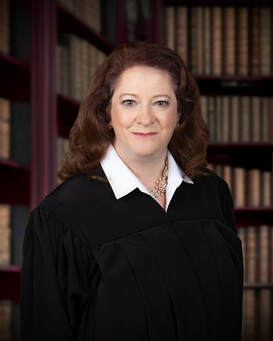
Maria Lazar
Maria Lazar
Why do you want to become a justice on the Wisconsin Supreme Court? I am running to serve as a Justice on the State Supreme Court to restore justice, independence, impartiality, and integrity to the courts and our highest court. I believe every case deserves a fair hearing, free from political influence or partisanship. I have grown increasingly concerned that judicial elections in Wisconsin have turned into bitter, partisan political campaigns where the qualifications and judicial experience of the candidates is ignored and special interest and political parties vie to seat their preferred justice. My home state of Wisconsin deserves better. It deserves a Justice who will remember that the sole purpose of the courts is interpret the Constitution and laws, not to legislate from the bench. The goal of justice is not to please any party, but to serve the people. That has how I have conducted myself for the more than eleven years I have served as a judge. I have lived my entire professional career with the sole purpose to serve justice, to respect the laws, and to protect the rights of the people of my state. This is a race to restore to the Supreme Court that sense of fairness and integrity that appears to have faltered. People in Wisconsin deserve a court that they believe in and one that they know will operate fairly and without judicial activism. Every day that I enter my courthouse or place on my black robe, I remember that obligation – that I owe a solemn duty to the people who have elected me as their judge. I believe that I am the better candidate in this race, that I can administer justice for the people of this state, and that my determination and dedication to the law will continue to enhance my service. The short answer to this question, is that I am running because I believe, in my heart, that this the right thing to do at this time – for me and my fellow Wisconsinites. Many times it is the little-known opinions that cause the most devastation. One of the most basic principles that underlies every person’s ability to prosper, to gain security and to pass that down to their children is the right to own private property and to keep that property out of the hands of a government that seeks take it away. The Fifth Amendment clearly provides that no person shall “be deprived of life, liberty, or property, without due process of law; nor shall private property be taken for public use, without just compensation.” The US Supreme Court case of Kelo v. City of New London, 125 S. Ct. 2655 (2000) does precisely when it allowed a government to take private property to allow another private land-owner to develop a project after demolishing several homes. Describe your judicial philosophy. I am an originalist with a leaning towards textualism. I believe the Constitution is the rock to which our republic is anchored. That means the text of our law should always first be given the original public meaning that they had when they were drafted. The first, and best, source of interpretation is the words and phrases used by the legislature when it drafts our laws. Judges are not supposed to scrutinize documents in an effort to find a hidden intent by the drafters. We should consider the language of the text, and only when it is ambiguous, should we look further. First, we should look to the rest of the statute, its heading, and surrounding statutes. Then we can go to secondary sources such as dictionaries and other legal documents that were written at the same time. Our laws must have a fixed or settled meaning or we will invite uncertainty and leave the door open for judicial activism. This is in line with the separation of powers doctrine. The rule of law is one of – if not the most basic – fundamental principles in our representative democracy. To ensure that the law is respected, a judge/justice must be independent of agendas, political persuasion, and bias. Judges must never align themselves with a political parties or special interest groups. To do so is to jeopardize the impartiality with which we must make our decisions. The law must be a level playing field for all individuals regardless of their race, age, gender, nationality, sex, or political persuasion. Each party is entitled to respect and an opportunity to have a full and fair opportunity to present their case. I have never tilted a decision based upon who was the litigant. Justice must always be blind in that respect. Judges must strike the proper balance of deference to the law as written while still upholding our duties as one of the three branches of government. In my eleven years as a judge, I have devoted myself to respecting that law while constantly striving to interpret the laws fairly so as to protect the rights and liberties of all people in my court. Underneath it all, my role is to impartially interpret the law to give it the proper effect. The main attributes of a good justice who follows this philosophy is to have the ability to exercise fair, impartial, and legally based judgement. The second case I handled as a civil judge. It involved a $50 million bond transaction to a Native American tribe to establish a riverboat casino, hotel, and bed-and-breakfast. I heard the equitable or legal issues during a nine-day bench trial, and then there was to be a 7-week jury trial. After finding jurisdiction, under Teague v. Bad River Band of Lake Superior Chippewa Indians, 236 Wis. 2d 384 (2000), I learned about tribal law and constitutions. In addition to my written decision, I made hundreds of rulings on various motions. I issued a 55-page written opinion concerning the legal issues of express or implied warranties, whether documents were void as ultra vires acts or invalid under the Tribal Constitution, and then the parties settled the other issues right before the jury trial. It was an amazing case and confirmed my belief that I not only belonged on the bench, but that I would excel as a judge/justice. As a judge, I endeavor to respect the law, to look for the meaning and intent of its drafters all the while honoring the rights and liberties of everyone who appears in front of me. It is in this way that I truly administer justice. I respect and always endeavor to uphold the Constitutions—state and federal—and strive to remember the oath I took as an attorney, an assistant attorney general and a judge to act fairly and impartially and without respect to persons. The law is paramount, for without it, our rights would be trampled and chaos would ensue. It is only in pursuing that vision of the blind-foldled lady justice that we can achieve justice. Provide any other information you feel would be helpful to potential voters deciding for whom to vote. I have the legal and judicial background that makes me exceedingly qualified to be your next Justice. When I was an AAG, in a foster care case, I was devastated when a Dane County Judge told me that the law didn’t matter. Knowing I could do better, I ran for circuit judge in Waukesha County where I served seven years in many rotations, including Drug Treatment Court, and as presiding judge in two. I was elected to the Court of Appeals (District 2), where I have served for four years. My opponent spent two years on the criminal bench after her appointment and has been an appellate judge for three. During my 11 years as a judge, I have faithfully applied the law to ensure justice for all parties. Unlike a politician, I have never (and will never) legislate from the bench. I have taught literacy to adults and served on community boards. I have been active in my church, my children’s schools, and I educate students, lawyers and judges about our judicial system. I approach my judicial role with humility and an understanding that I am a part of one branch of government and that my role is only to say what the law is, not what I want it to be. I take my oath of office seriously. We swear to uphold the Constitutions and to administer justice “without respect to persons.” That means that a good judge/justice never looks at who is in front of them in the courtroom, or which side has a better lawyer, or a member of a political or social group. I discover the facts and then I apply the law as it is written and make a rational, reasonable decision without respect to persons. I went to law school to give something back to my state and its citizens. I became a judge because I saw justice was being trampled upon and knew that I could do better. I am fair, independent, and impartial. Unlike my opponent, I have never been a member of a political party nor have I been appointed to any judicial position. It is critical to the people of my state that they elect a Justice who has the courage to stand against the winds of chaos, who will set aside all political biases and agendas, and will serve as a humble and faithful servant of the law. |

Chris Taylor
Chris Taylor
Why do you want to become a justice on the Wisconsin Supreme Court? It is so important that the people of Wisconsin have a strong State Supreme Court committed to protecting their rights and freedoms, our democracy, our state, and delivering justice to the people of Wisconsin in the fairest, most independent way possible. I have spent my thirty-year legal career as an attorney, legislator, and judge, using the law to improve people’s lives and our communities. I have worked to make sure that the people who appeared before me in the Circuit Court and in the Court of Appeals have a fair chance to present their cases, that their positions are carefully considered and that I apply the rule of law evenly, fairly and independently. Throughout my legal career, I’ve been focused on applying these core principles in the many capacities in which I have been fortunate to serve. I am running for the Wisconsin Supreme Court to continue this work for the people of Wisconsin. Two decisions by the U.S. Supreme Court that have negatively transformed our country are Citizens United v. Federal Election Commission and Dobbs v. Jackson Women’s Health Organization. I center my role as a judge on the principle of equal justice under the law. To me, this means that every litigant whose case I consider is entitled to being treated fairly, and to having their constitutional and legal rights protected. This principle also ensures that no individual or entity is above the law, and that the rule of law must apply to everyone, including the most privileged and powerful. Two significant published cases I have authored as an appellate judge are Rise, Inc. v. Wisconsin Election Commission, 2024 WI App 48, 413 Wis. 2d 366, 11 N.W.3d 241, and Hubbard v. Neuman, 2024 WI App 22, 411 Wis. 2d 586, 5 N.W.2d 852. I spent many years practicing law in the civil arena, where I focused on family law. I represented regular people dealing with stressful family situations that required legal resolution. I also served as a Guardian Ad Litem and volunteer mediator. As the legal director at Planned Parenthood of Wisconsin, I advocated for policies that protected and facilitated access to health care, including the Compassionate Care for Rape Victims Act, which requires all hospital emergency rooms to tell sexual assault survivors about emergency contraception to prevent pregnancy and to dispense the contraception if requested. In the legislature, I introduced and advocated for over 250 bills and resolutions to expand access to affordable health care, protect clean drinking water and to provide economic support for working families. I had a complicated, lengthy and contentious homicide trial, which involved strong emotions for the families, friends and communities impacted and strong public sentiments. I focused on maintaining a calm and respectful courtroom, anchoring myself in the law and the sentencing factors I was required to consider, and in delivering a thoughtful, balanced and fair decision. Wisconsin’s recusal rules require judges to evaluate each case individually to determine whether they can be fair and impartial. I take my recusal obligations very seriously and examine every case in front of me to ensure that I can fulfil my responsibilities and also ensure that the public has faith in the decisions I make. I am the only candidate in this race who supports holding a public hearing to solicit the public’s input in strengthening judicial recusal rules. Wisconsinites deserve to have faith and trust in their judicial system, and the judicial system needs the public’s trust to fulfill our duties. To me, “true justice” occurs when litigants have access to affordable, quality legal services; when litigants have the ability to present their cases to a fair, impartial court; and when our courts have the resources and time to thoroughly consider the merits of each argument. And finally, true justice depends on strong community resources and support systems. These resources should help individuals address conduct which resulted in their contact with the legal system and skills to avoid conflict in the first place. Provide any other information you feel would be helpful to potential voters deciding for whom to vote. The people of Wisconsin deserve a strong State Supreme Court that will stand up for them. I will be a justice for all Wisconsinites. |