
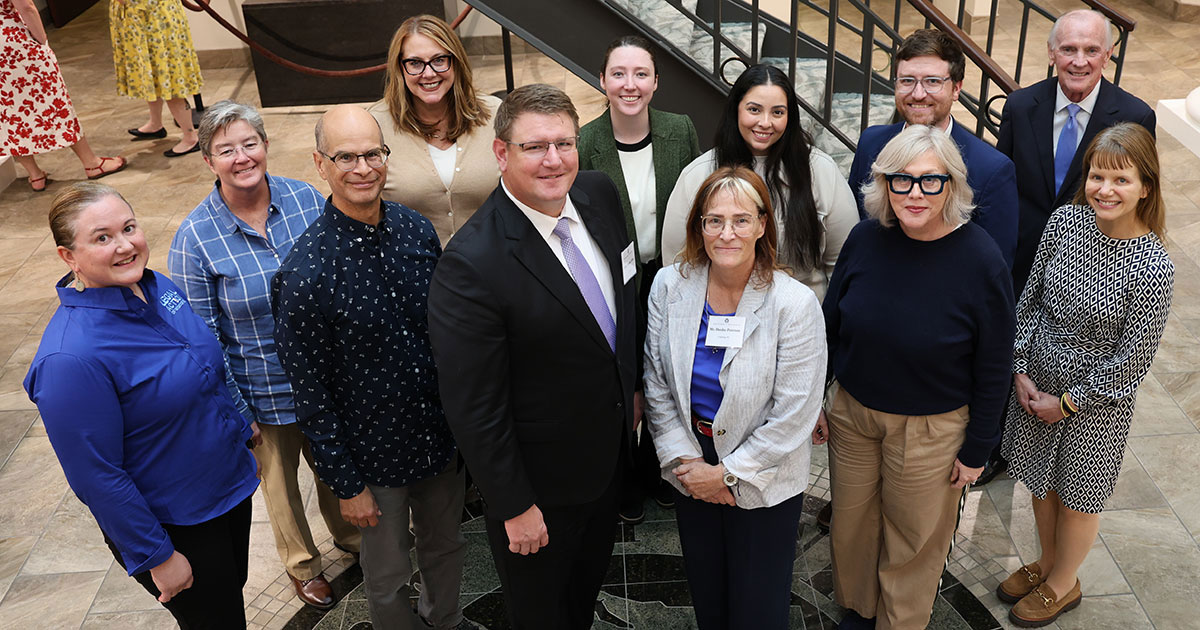
A group of proponents for the proposed rule petition to create non-lawyer legal advocates spoke at the Sept. 18 Board of Governors meeting.
Sept. 22, 2026 — The 53-member State Bar of Wisconsin Board of Governors (Board) learned the details of a rule petition (26-04) that would allow non-lawyer legal advocates, under lawyer supervision, to represent clients in specific case types.
The Wisconsin Access to Justice Commission filed Petition 26-04 with the Supreme Court in early September. The proposed rule would create Supreme Court Rule (SCR) Chapter 51 to establish a certifying procedure and limited scope of work for “legal advocates.”
The rule would allow nonlawyer legal advocates to advise and represent clients in small-value civil cases under a supervising attorney similar to law students under Wisconsin’s student practice rule in SCR Chapter 50.
At the first Board meeting of the new fiscal year — held Sept. 18 at the State Bar Center in Madison in conjunction with the Joint Leadership Orientation — the Board discussed the proposed petition and asked pointed questions but took no action.
Led by Section Leaders Council Rep. James E. Goldschmidt — who helped draft the petition along with team members at Quarles & Bradly LLP — a guest panel explained the impetus for the proposed rule and addressed common questions. Guests included:
- Prof. James Sandman, Joseph F. Rice School of Law at University of South Carolina;
- Prof. Rebecca Sandefur, Sandra Day O’Connor College of Law at Arizona State;
- Hon. Thomas Hruz, Judge, Wisconsin Court of Appeals;
- Beth Ann Richlen, Chief Strategy Officer, Legal Action of Wisconsin;
- Rebecca Rapp, General Counsel, Ascendium Education Group
- Mary Ferwerda, Pro Bono Counsel, Quarles & Brady;
- Grace Stewart, Associate, Quarles & Brady; and
- Ryan Rainey, Associate, Quarles & Brady.
State Bar members will be asked to submit written comments before the Dec. 4 Board meeting in anticipation of a public hearing on the petition early next year.
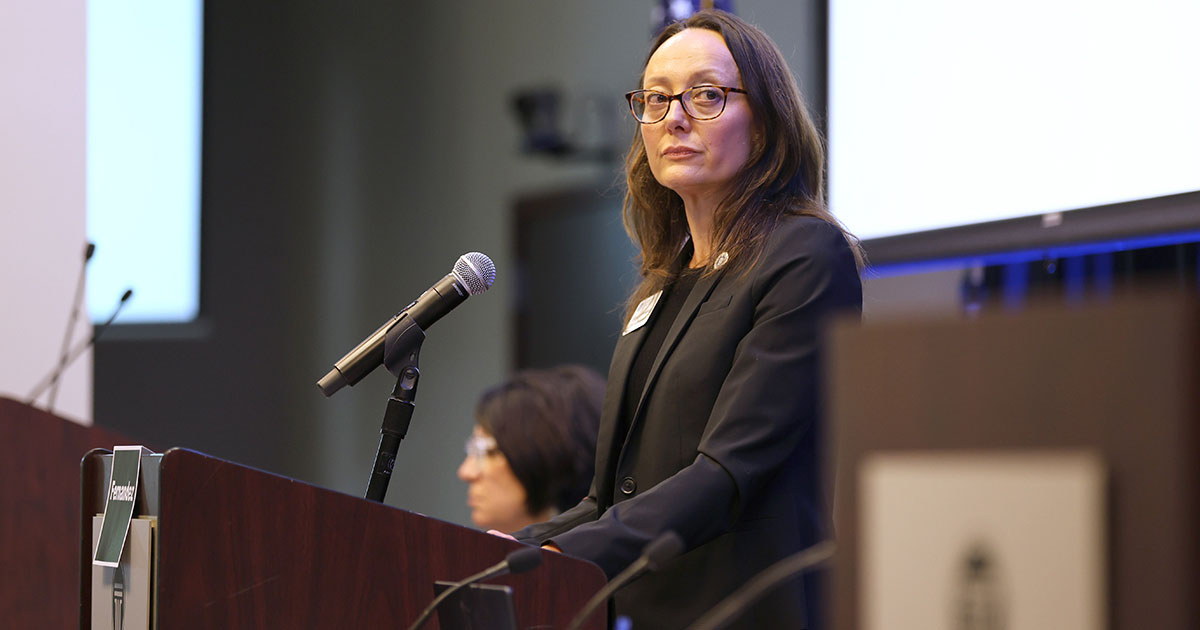
Elizabeth A. Fernandez, chair of the Board of Governors for FY 2027, chaired her first Board meeting of the term.
Access to Justice
In 76% of civil cases in state courts nationwide, at least one party appears without a lawyer, said Prof. Sandman, a former president of the federally funded Legal Services Corporation and a national expert on access to justice issues.
“I’m not talking about traffic ticket cases,” explained Sandman. “I’m talking about cases that involve the roof over your head, protection against wrongful eviction or foreclosure, personal safety, [and] getting a protection order against an abuser.”
“It wasn’t always this way,” said Sandman. A 1976 study by law students, published in the Yale Law Review, identified in two family law courts that at least one party was not represented in 2.7% of cases. The problem will only get worse with non-represented individuals relying on artificial intelligence (AI), Sandman said.
Judges across the country report “a dramatic increase in the number of documents filed by self-represented litigants who are using AI to generate them, riddled with inaccuracies and hallucinations, which aren’t always immediately apparent and can be very challenging for the judge to tease out.”
Dist. 9 Gov. Richard Niess, a former Dane County Circuit Court judge, knows from experience the effects of non-represented individuals in the courts.
“Having a pro se litigant limits the ability of the judge to effectively handle the case,” Niess said, because they have limited knowledge of procedure.
When both parties were not represented, Niess recalled, “it was really off the charts in terms of confusion.”

Section Leaders Council Rep. James E. Goldschmidt spoke in favor of a proposed petition, filed by the Wisconsin Access to Justice Commission, which would allow nonlawyer “legal advocates” to represent clients in limited cases under attorney supervision.
Attorney Recruitment and Retention
The Supreme Court suggested the idea of “non-lawyer advocates” in its Attorney Recruitment and Retention Committee Report and Recommendations released last November. The Access to Justice Commission was tasked with exploring the idea.
The report included a strategy to “[s]tudy the feasibility of establishing a limited license practitioner (LLP) program to provide legal services in specific, non-criminal practice areas.”
The Supreme Court hoped these non-lawyer professionals “may help create additional capacity among existing attorneys” and to “serve the goal of expanded access to justice” in matters in which the party may not have an attorney.
The new role may “address the critical shortage of attorneys throughout Wisconsin, especially in rural areas, but also in the high-volume courts of Wisconsin’s urban centers,” stated the Memorandum in Support of the rule petition.
Legal advocates would appear in matters, the Memorandum in Support explains, “that are too small for many attorneys to take.”
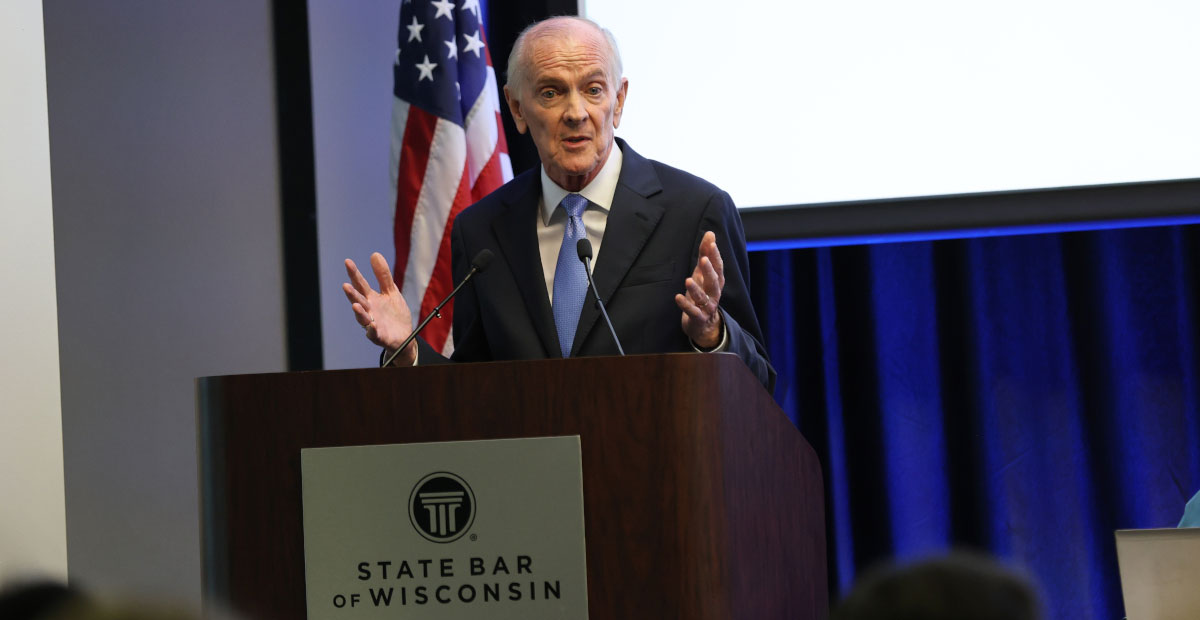
Prof. James Sandman of the Joseph F. Rice School of Law at University of South Carolina, a former president of the federally funded Legal Services Corporation and a national expert on access to justice issues. Prof. Sandman provided a history of access to justice challenges in the U.S., going back to the 1970s.
The Proposed Rule
Under the proposed rule, an individual who holds at least an associate’s degree or a high school diploma and “at least five years of relevant lived, educational, legal or other experience” would be eligible to become a legal advocate.
 Jay D. Jerde, Mitchell Hamline 2006, is a legal writer for the State Bar of Wisconsin, Madison. He can be reached by email or by phone at (608) 250-6126.
The applicant would have to “demonstrate good moral character and fitness to practice,” pass a background check, and complete training on applicable ethical rules.
Individual certification would require a written supervisory agreement with a law firm or organization, which under the proposed rule is a “certifying entity.”
A Supreme Court Standing Committee on Legal Advocate Programs would run the program. For a legal advocate to receive approval, the certifying entity would submit the candidate’s application and identify “the ratio of supervising attorneys to legal advocates” in the firm.
The certification could be renewed after two years.
The law firm would assume professional responsibility for the legal advocate’s legal services and ensure the legal advocate receives all necessary substantive and ethical training.
A potential client may consent to representation by a legal advocate after the client was advised that the legal advocate is not a lawyer.
The proposed rule limits a legal advocate to small-claim civil matters for which the rules of evidence don’t apply, residential evictions, and divorces with marital property assets no greater than $100,000.

Hon. Thomas Hruz, Judge, Wisconsin Court of Appeals, spoke on the proposed petition for legal advocates.
Debate in Other States
The District of Columbia and 15 states have adopted or have legislation pending to create similar legal advocate positions, Sandman said, and 19 states are actively considering it.
Minnesota adopted a Legal Paraprofessionals Program in 2021 that resembles Wisconsin’s proposal.
The Illinois Supreme Court expects a final recommendation by Oct. 1 for a Community Justice Worker Program in which certified and supervised non-lawyers would work with civil legal aid organizations.
The Illinois proposal matches many existing state programs that place the non-lawyers under supervision with legal services organizations. Such arrangements exist in Alaska, Arizona, Delaware, the District of Columbia, and Utah, and are proposed in California.
States that offer limited license practitioner programs, according to the Supreme Court’s report, also include Colorado, Oregon, and Texas, with a proposal in discussion in Georgia.
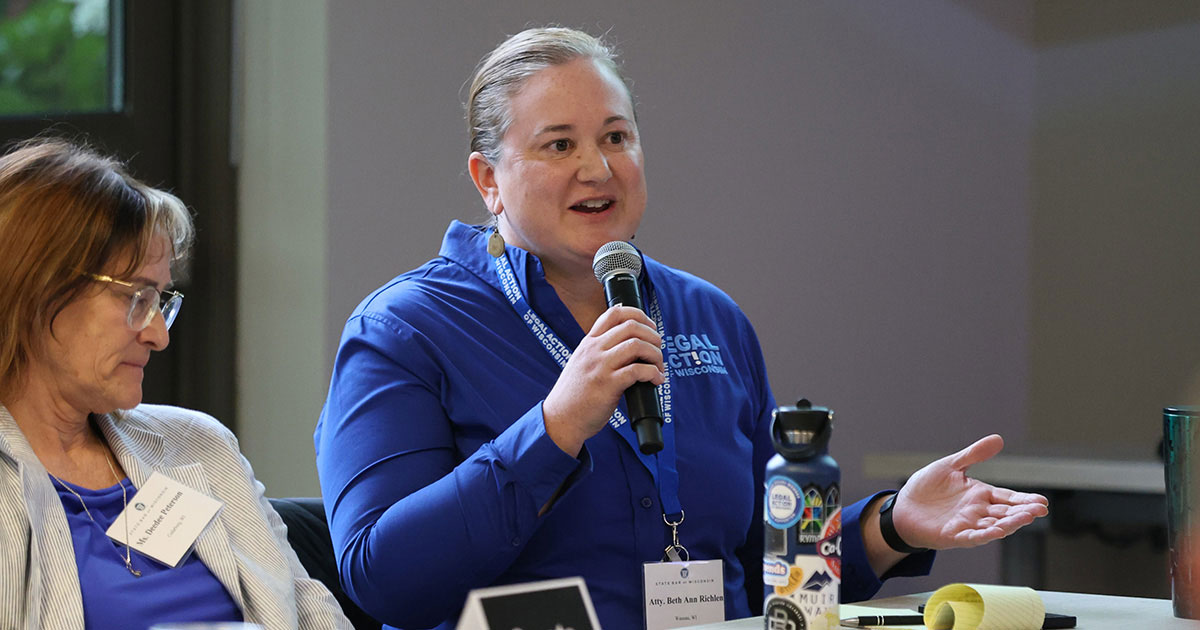
Beth Ann Richlen, chief strategy officer for Legal Action of Wisconsin and former executive director of Judicare Legal Aid, was among the panel supporting a proposed petition for “legal advocates.”
Force Multiplier for Lawyers
Governors raised concerns about whether legal advocates would reduce opportunities for lawyers. Because a legal advocate cannot operate separately from a supervising attorney, “they will not take work away from Wisconsin attorneys,” the Memo in Support argues.
Legal advocates will be “a force multiplier, and it multiplies what you can do through others,” Goldschmidt said.
A similar debate arose more than 60 years ago when the Board created Judicare in Wisconsin, said Beth Ann Richlen, chief strategy officer for Legal Action of Wisconsin and former executive director of Judicare Legal Aid. It didn’t reduce the need for lawyers.
The Judicare model of civil legal aid relies on private attorneys paid in part by a civil legal aid organization “to take cases on behalf of our clients at a low pro bono rate,” Richlen explained.
“The clients that were served and the attorneys who participated had great results, and attorneys and their firms used it frequently as a model to train young associates,” Richlen said.
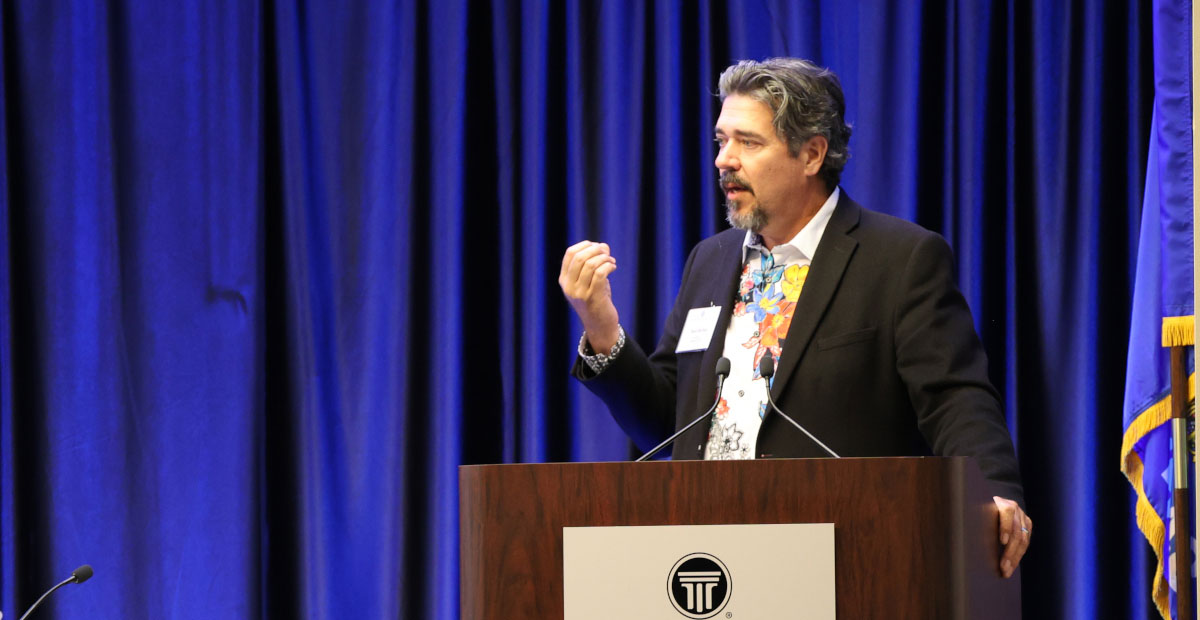
Basil J. Buchko, State Bar of Wisconsin Secretary, spoke on leadership duties and expectations for FY 2027.
For many years, Judicare has “used licensed lay advocates in tribal courts” under lawyer supervision, Richlen said.
“These legal advocates have helped meet an incredible demand for our services at our clinics and at courts,” but “we still are not meeting the need,” Richlen said.
Dist. 2 Gov. Mary Schanning asked whether in other states with similar positions “there is a concern that firms and organizations are going to be more likely to hire legal advocates as opposed to brand new lawyers” because legal advocates would cost less to employ.
A legal advocate, Goldschmidt said, would be billed at a lower rate than a lawyer could bill. “I think law firms will continue to, from an economic perspective, maintain an interest in being able to charge clients for the services of attorneys,” he noted.
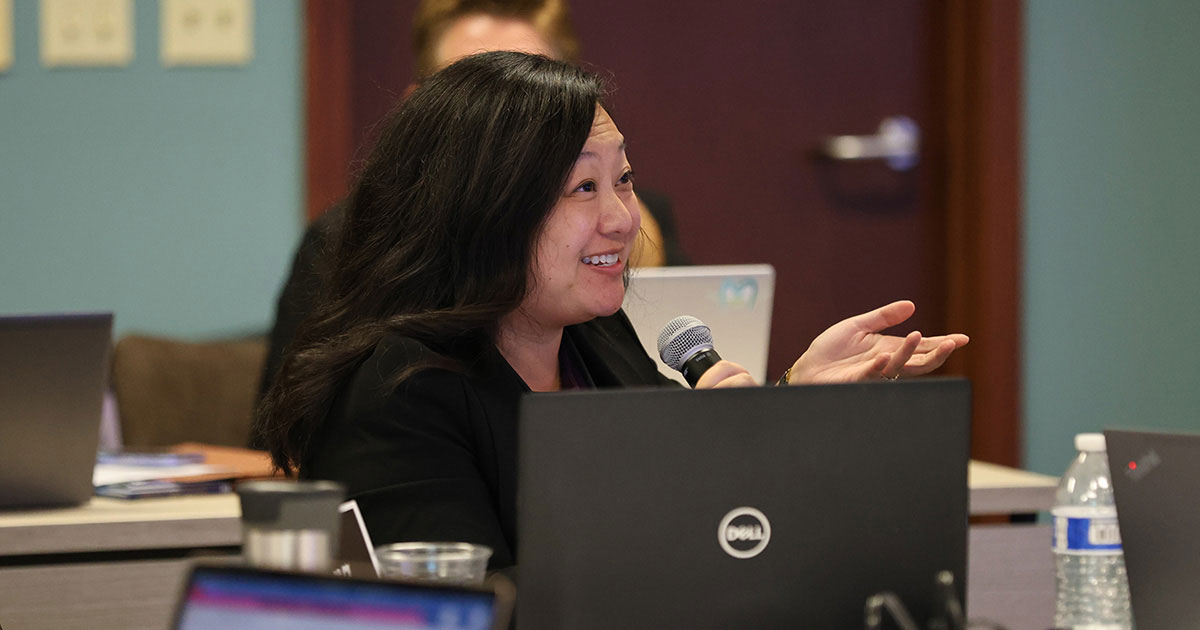
Dist. 9 Gov. Annabelle Vang provided comments on the proposed petition on “legal advocates.”
Measuring Complexity?
The proposed rule lists only eight exceptions where legal advocates may not practice, such as criminal law and liberty interests, that reflected the concerns of stakeholders while providing a manageable number of exceptions, Goldschmidt said.
Governors expressed concerns about where the proposed rule drew the line.
“I’m kind of confused how you can say there’s a strong framework for training, supervision, and accountability when nowhere in the rule can I find actual standards for what someone has to do to become a legal advocate,” commented Dist. 2 Gov. Colleen Taylor.
Taylor described the requirements of a certified paralegal, who must pass a test, meet CLE requirements, and have thousands of hours in substantive work experience, which “seems substantially more strenuous” than the requirements for a legal advocate who will assist a client.
The certifying entity — the law firm or organization — backed by its professional liability, provide the necessary assurance of training, Goldschmidt responded.
Although the rule prevents legal advocates from working on a divorce case involving more than $100,000 in marital property, the rule is silent on monetary limitations in other areas.
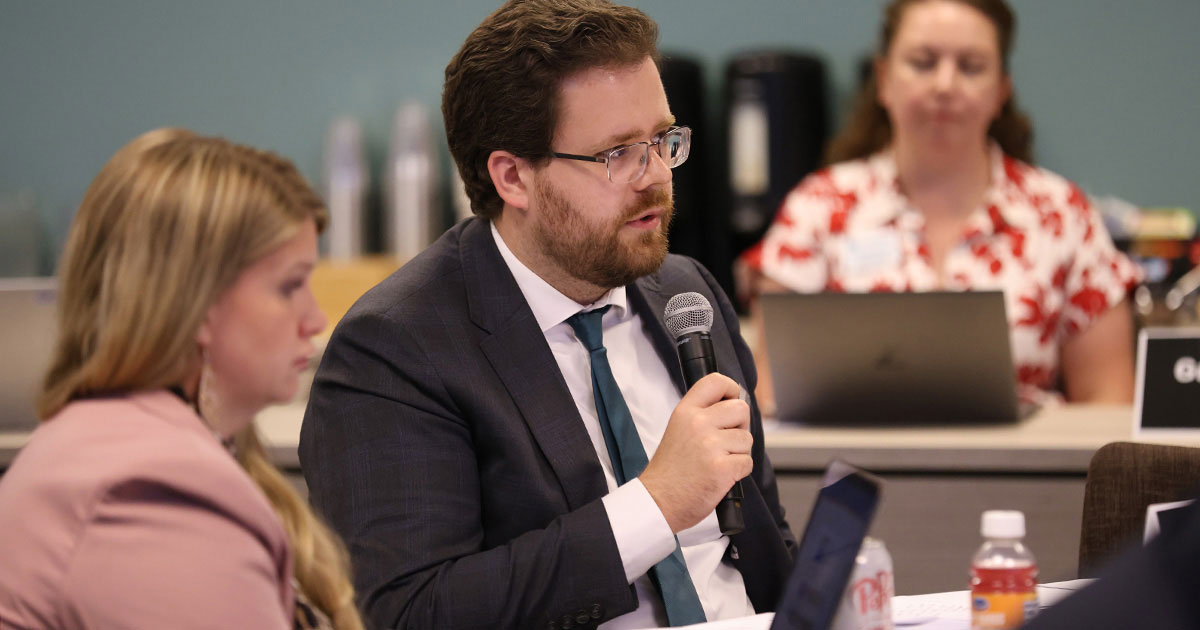
Dist. 7 Gov. Steven Thompson offered comments during the discussion on the petition for nonlawyer “legal advocates” in Wisconsin.
Dist. 14 Gov. Mark Bartels asked about the $1 million real estate deal and a $1 million estate plan. “What’s the difference between the things that are not authorized in the rule specifically and some other things that also have to do with high stakes money, vulnerable adults in elder law, dealing with Medicaid planning, or powers of attorney?”
A legal advocate could work on such matters if the supervising attorney is comfortable with the legal advocate’s training and experience, Goldschmidt explained.
“I can see the need for low-income people getting help with wills or powers of attorney,” commented Dist. 7 Gov. Steven Thompson. “But at what point are [legal advocates] drafting charitable remainder unitrusts?”
“The defense of, if an attorney is comfortable certifying that this person’s capable and willing to do that, I can appreciate that,” Thompson said. But the $100,000 limit in divorces is “not a liberty interest. That’s a financial interest.”
“The practical part of the answer,” Goldschmidt responded, “is if it’s that high stakes, you’re going to want an attorney.”
“It’s a fair question,” he said, why one type of practice has monetary limits and others don’t.
Dist. 9 Gov. Annabelle Vang questioned whether $100,000 truly measures complexity in family law matters, a concern of the Family Law Section.
“You can have individuals that earn $1 million but are $2 million in debt so technically, they don’t have marital property assets valuated above $100,000, but we’re looking at some pretty complex support issues, for example.”
Goldschmidt agreed that further input from sections can help improve the proposed rule through the comments that the State Bar submits to the Supreme Court.
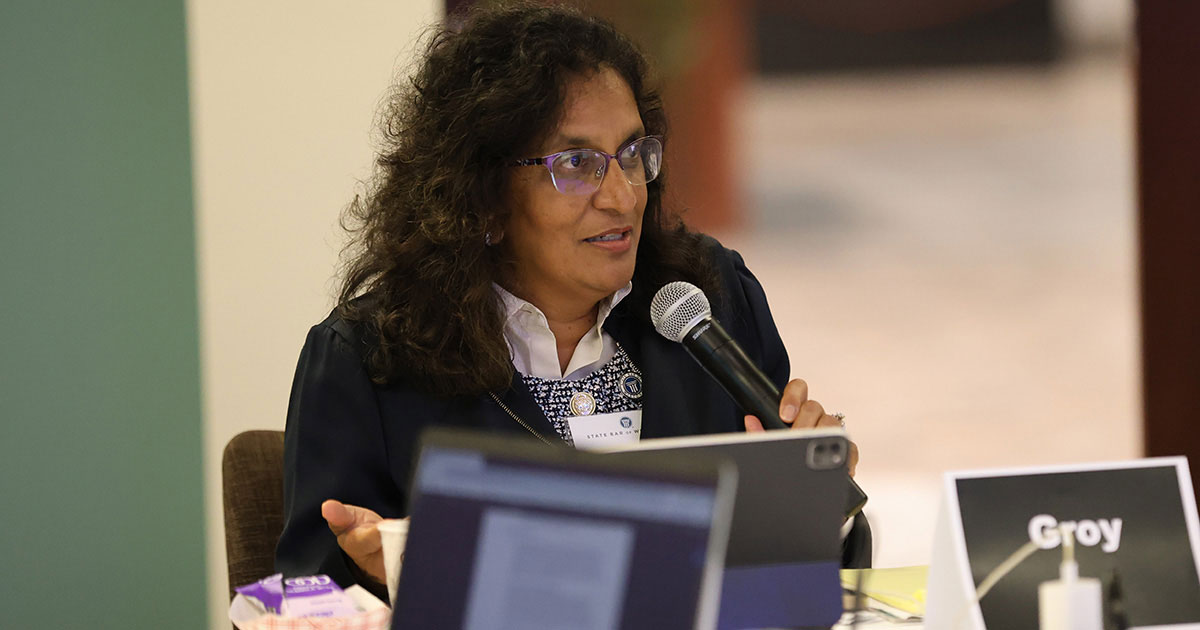
Dist. 9 Gov. Gail Groy offered her perspective on proposed petition 26-04.
Other Business
In other business, the Board:
- Discussed a new Diversity & Inclusion Plan. The plan for 2027–29 sets goals to strengthen the legal profession to serve Wisconsin communities, expand pathways to leadership and growth, and build a more engaged legal community.
- Approved appointment of a Nomination Committee. The committee to seek candidates for the April 2027 State Bar elections includes: Christopher E. Rogers, State Bar President in 2018–19 from Madison; Dist. 2 Gov. Scott Brown of Milwaukee, Cathleen Dettmann of Madison, Dist. 5 Gov. Shari Locante, and Dist. 9 Gov. Ryan Poe-Gavlinski.
- Approved updates to the Board’s policy positions. The recommendations from the Policy Committee updated three positions in the State Bar Board’s Policy Positions Handbook, also known as the “white book.”
- Granted section carry forward requests. The requests allow funds remaining at the end of the last fiscal year to be transferred into the current 2027 fiscal year, which began July 1. The sections requesting the transfer included Bankruptcy, Insolvency & Creditors’ Rights (BICR), Elder Law & Special Needs, and Family Law.
- Deferred discussion on pro bono reporting. The proposal, scheduled to be discussed at the Dec. 4 Board meeting, would change the number of pro bono hours that count toward a credit for continuing legal education (CLE). Under SCR chapter 31, attorneys may now claim an hour of CLE for every five hours of pro bono work. The proposal would change to one hour of pro bono work for one hour of CLE.
Members may obtain a copy of the minutes of each meeting of the Board of Governors by contacting State Bar Executive Coordinator Kim Jansen by email or phone at 608-250-6106.